News

September 16, 2026

California’s Electric Utilities Are Becoming Uninvestable

With Sacramento letting SB 492 stall and California's strict inverse condemnation doctrine still leaving utilities liable for grid-caused wildfires regardless of negligence, PG&E and Edison International face mounting pressure on their cost of capital just as the state needs major grid investment. TPR here republishes Bloomberg Opinion energy columnist Liam Denning's analysis of why California's electric utilities are becoming uninvestable, and of the reforms that could shift wildfire risk away from ratepayers and toward insurance markets. See the original publication here.

September 16, 2026

Carmelita Ramírez-Sánchez & Catherine Baltazar: Lineage Fire

This past June 17th, fire broke out at the roughly 500,000-square-foot Lineage cold storage facility on the seam between Boyle Heights and unincorporated East Los Angeles. It burned through reignitions until knockdown on June 24, prompting a number of shelter-in-place orders and emergency declarations from both Mayor Bass and Governor Newsom. TPRVX, to better understand the Impacts and response, spoke with Carmelita Ramírez-Sánchez , executive director of the Boyle Heights Arts Conservatory, which operates a neighborhood resilience hub, and Catherine Baltazar, associate director of advocacy and organizing at Climate Resolve. The focus is on the response, the jurisdictional gaps it exposed, and why implementation, not legislation, is the binding constraint.


September 15, 2026

Wildfire Survivor Network’s Joy Chen on: Recovery & Accountability

Twenty months after the Eaton Fire, a pickleball WhatsApp group from the Altadena Town & Country Club has become one of the more consequential forces in California utility and insurance policy. The Every Fire Survivor's Network (EFSN)now speaks for more than 10,000 Eaton and Palisades survivors, and its executive director, Joy Chen – a former Los Angeles deputy mayor and Fortune 500 executive recruiter – spent the summer in Sacramento arguing that California does not have a wildfire liability problem so much as a fire causation problem.

August 25, 2026

USC’s Luskin Center’s State of Los Angeles County Housing and Neighborhoods (SOLACHAN) 2026

As Los Angeles County's homeownership rate falls to a near 54-year low and 57 percent of renters spend a third or more of their income on rent, the question of whether a decade of pro-supply policy is finally registering in the data has become central to the region's housing debate. TPR here republishes the Directors Letter on the The State of Los Angeles County Housing and Neighborhoods (SOLACHAN) 2026.

August 25, 2026

Saving the City: Ron Blatman

In conversation with TPR, Ron Blatman, the San Francisco producer behind the PBS series Saving the Bay and now Saving the City, a four-part documentary on urban civic problem-solving headed to public television and streaming, argues that the durable municipal wins of the last quarter century have come from parks, trails, and reclaimed waterfronts

August 6, 2026

The “Naivety” of NYC’s RFP for 5 Publicly Funded, Private Operated Grocery Stores

TPR excerpts here the New York City Economic Development Corporation’s RFP issued July 27 which seeks operators for N.Y.C.— five publicly funded, privately operated grocery stores, one per borough, by 2029. NYCEDC will fund and deliver turnkey fit-out, cover rent and property taxes across a term of at least ten years. NYCEDC will retain ownership of the store brand; selected operators will merchandise and staff the stores and sell a designated "Core Basket" of produce, meat, seafood, and essential groceries at prices averaging 30 percent below retail, supported by negotiated "Affordability Payments" underwriting the resulting operating deficits. Restaurant insider Nick Kokonas’ online analysis of the RFP is also included and follows.

August 6, 2026

Felicia Marcus "A New Bridge With Another Expiration Date"

In conversation, Felicia Marcus, the William C. Landreth Visiting Fellow at Stanford's Water in the West program and former chair of the California State Water Resources Control Board, assesses the plan federal officials have just accepted to cut Colorado River use through 2028 which she calls a large band-aid rather than the tourniquet the basin needs. She reflects on 25 years of living beyond the river's means, the compact arithmetic that set the overallocation in motion, and the shift required from two-year interim patches toward a durable post-2026 framework. Drawing on service at the federal, state, and municipal levels, Marcus argues that Washington has abandoned the "800-pound gorilla" role that once produced the Bay-Delta Accord and the Quantification Settlement Agreement. Her prescription rests on financing and inclusion – capital to scale conservation and retrofits, and negotiations that reach past the seven state delegations to local agencies, academics, and tribes.

August 4, 2026

Two cities burned in LA fires settle YIMBY lawsuit

The Planning Report here shares a CalMatters’ Ben Christopher feature that reports: homeowners in Malibu and Pasadena, who saw their neighborhoods burn in the Eaton and Palisades fires last year, will soon be able to build up to four units on their properties now that the two fire-scarred cities have settled a lawsuit brought by pro-development activists. In the settlement: both Malibu and Altadena agreed to repeal their local anti-duplex ordinances suspending SB 9 in post-fire very high fire hazard severity zones and accept all pending and future applications filed under the law.

August 4, 2026

California Has Reset the Economics of Rooftop Solar: The Math is Less Appealing

In this New York Times feature, TPR excerpts reporting by Francesca Paris on the eroding economics of residential solar, following President Trump's repeal of the federal residential solar tax credit last year and a decade-long, state-by-state rollback of net metering — the rate mechanism, dating to the 1980s, that has underwritten rooftop solar's return on investment. More than a third of U.S. states have restructured their net metering rules over the past ten years, and in some cases the changes have cut homeowner savings by hundreds or thousands of dollars annually.

August 4, 2026

California High-Speed Rail Authority and High Desert Corridor JPA Advance Statewide High-Speed Rail Connectivity

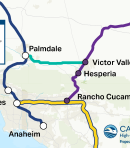
TPR shares the California High-Speed Rail Authority's July 20 announcement of a new Memorandum of Understanding with the High Desert Corridor Joint Powers Agency. The signed MOU, a major step in advancing California’s vision for a fully connected, statewide electrified high-speed rail network, deepens coordination on environmental clearance, station integration, and design at Palmdale Station; and promises to fill a key gap in the statewide highspeed network.

Pages

Advertisement

© 2026 The Planning Report | David Abel, Publisher, ABL, Inc.