


In 2028, Los Angeles County voters will elect the county's first executive, the centerpiece of Measure G, the charter amendment that narrowly passed in November 2024. Few people understand the job being redesigned better than David Janssen, who ran the county bureaucracy as chief administrative officer from 1996 to 2007 after 13 years in San Diego County's CAO office. TPR reached out and asked him “What problem the LA County Reform is purportedly meant to solve; whether Measure G, the skeleton reform offered, is likely to solve it; and, whether any charter reform can solve the reform challenges described.”
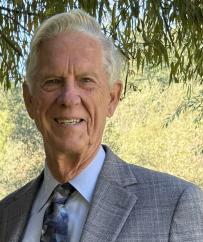
“To be successful, county government services have to be integrated... Now, integrating services isn't automatic; it depends on who is hired or elected to make it happen.”
In 2028, voters in Los Angeles County will elect a county executive. In simple terms, how will that person's job responsibilities likely differ from the County CEO job you once held? To begin, describe the County CAO position you once held.
David Janssen: When I started with the county in 1996, the organization consisted of a Board of Supervisors and a chief administrative officer with 38 department heads. The board had both legislative and executive authority. The departments were all legally responsible to the Board of Supervisors. The CAO, depending on who held the job, was first among equals, because the CAO had access to the board members every week, which department heads didn’t have.
The board gave me wide discretion over how the county worked as an organization and supported me in using it. Their staff was involved in developing the strategic plan, and the board approved it. But the board’s decisions were made on Tuesdays, in public, many of them based on recommendations from the departments and from me.
Under the new structure, with an elected executive, that changes dramatically. The county executive will have the ability to appoint department heads. That changes the dynamic completely. The board now has legislative authority; the administrative authority is separated. It’s not unlike a state, where you have a governor, a legislature, and a judiciary, and I assume that’s what they modeled the change on.
That separation of executive from legislative power is significant. With the exception of the elected offices, department heads will report to the new executive, not to the Board of Supervisors, and the hope is that this change in reporting will improve results for county services. As the organization operates today, the board has no real way to consolidate issues that overlap between departments other than to ask the chief administrative officer to make it happen. And the CAO doesn’t hire or fire department heads, so the organization’s success depends largely on the trust between that office and the department heads.
This is going to be dramatically different, in terms of responsibility, accountability,and authority, from what existed when I started there.
From your cursory reading of Measure G, do you understand what powers remain with the board?
David Janssen: I'm going to say no. As far as I know, it's purely legislative. But think about what authority the Legislature has in California: passing laws and oversight. Those two things. It may be as simple as that.
Looking at the measure more closely since we spoke: Section 11.18 says the county executive shall appoint the heads of all appropriate agencies and departments, but those appointments are subject to the Board of Supervisors' approval. Interestingly, Section 11.20 provides that the executive may remove anyone appointed and approved by the board at any time, with or without cause. That adds a nuance to the relationship between the board and the executive that I hadn't realized existed. Section 11.54, on the other hand, makes an ordinance or resolution subject to veto by the county executive. That gives the office a significant power that, as far as I'm aware, doesn't exist in any form today.
David, please add context: describe for our readers Los Angeles County Government’s unusual governance structure/ organization.
David Janssen: Well, California loves to hate government because it has so much of it. The State of California has multiple elected officials, so the governor is not responsible for a lot of what goes on in the state. You have 58 counties. All counties except San Francisco have five elected supervisors, and all have the same responsibilities, whether it's Los Angeles with 10 million people or Alpine County with 100,000 or 10,000. Then there are 460 cities, hundreds of special districts, and roughly 1,000 school districts. That's the governmental structure of California.
Counties exist primarily to carry out the laws and policies of the State of California and the federal government. Almost no other county in the United States does that; in other states, the state provides those programs. In California, they decided it would be the counties. So the primary function of any county is to perform state- and federally mandated programs.
Counties also have unincorporated populations, and in Los Angeles, it's about a million people of the population, who don't live in a city. That means that in addition to the state and federal programs, the county is also the city council for those million people, spread throughout the county's 4,000 square miles in unincorporated communities.
Returning to Measure G reforms: How will the new LA County CEO – who in effect will be the “Council Mayor” of all those residing in unincorporated communities – likely relate post Reform to the unincorporated areas of the County?
David Janssen: I don't think that responsibility is defined differently in the new charter, which means the functions of the unincorporated area will fall to the executive. Under that structure, I would hope that he or she would have a chief deputy responsible for the unincorporated area. We attempted to do that early on, in 1997 or 1998, by creating an office of unincorporated area affairs in my office, with a deputy responsible for supervising, to the extent we legally could, and ensuring that municipal services were carried out the way they should be.
It's unique to county government in California that the Board of Supervisors also serves as the city council for almost a million people. That isn't solely the board's problem or the executive's; both will have to be involved in every issue affecting people who live outside incorporated cities. It's a similar challenge today, but it may be somewhat clarified by separating the board's executive and legislative responsibilities.
It's complicated somewhat by the fact that, and I don't remember the number, as many as 40 cities also contract with the county for basic services. The sheriff is a big one. Public Works is another big one. There may be others, but those two are huge. So, in those departments, the sheriff has obligations not only to its county functions but also to its contract functions for any given city. We're not even getting into funding sources, but counties are extremely complex organizations.
At the time, I think everybody, except maybe Supervisor Antonovich, believed a dramatic change had to happen in the structure: that making decisions once a week, in public, for critical health and human services that required overlap among all of those services just didn't work. This has been tried before. The Haynes Foundation tried it in 1976 and the voters rejected it. There have been other attempts. This one succeeded.
Does it surprise you that it succeeded?
David Janssen: Yes, it does, because you're adding bureaucracy and you're adding cost.
Even though they said it wouldn't cost anything, it's hard to believe that adding a structure like this isn't going to cost anything, and counties don't have a lot of discretionary dollars. You're adding an elected official, and generally, trust in elected officials isn't very high now, unless it's your elected official. You like your congressman and your senator, but nobody else's.
It was close, 51 percent, I guess. Two weeks later, it could have been different.
Expanding on the above, a traditional question asked when assessing the merits of any reform/institutional change is: What’s the problem Measure G portends to solve?
David Janssen: Well, there could be a difference between what I think the problem was and what they thought the problem was.
What do YOU believe is the central problem being addressed?
David Janssen: The problem is the lack of accountability in county services, because the responsible party, the Board of Supervisors, had no functional ability to ensure that those services were carried out.
A simple example is MacLaren Hall. There were continuing problems with the children housed there short-term. When we first looked at it, we found that the Department of Mental Health, the Department of Health Services, County Counsel, the Department of Children and Family Services, and I think one more (I think there were five) all had separate files for their people in MacLaren Hall. To the extent they talked to each other, you may have had a good outcome, but they had no reason to work together.
For many years, what I saw when I got there was the Board of Supervisors and the CAOs focused on an entrepreneurial organization, which was trendy at a particular time, but that model primarily applies to the private sector.
To be successful, county government has to be integrated. Services have to be integrated. You have to understand that when a police officer makes an arrest, it's going to affect every county department involved: police services, the public defender, the district attorney, the sheriff, the jails.
And at one time, believe it or not, in the '70s, the courts in California were part of the county budget. That's when I started in San Diego. Board members used to look at judges as just another department head. The judges didn't like that too much. That problem was resolved; the courts are no longer in the county budget.
But the inability of the board to supervise and provide accountability for the outcomes of department heads, primarily in children and family services, probation, and, believe it or not, animal services, where the public interacts with county services in an ongoing, hot-button way, was to me the real issue that needed to be resolved.
Now, integrating services isn't automatic; it depends on who is hired or elected to make it happen.
They could go back to an entrepreneurial system that says, "You're all on your own. Do the best you can. I'm here to provide guidance and maybe strategic planning." That's not a given. But the inability to hold anybody accountable has to be one of the principal reasons for doing this.
Pivoting, address the impact of California’s Brown Act on allowable communications between and among a County administrator, the elected Board of Supervisors and the scores of departments involved in delivering services.
David Janssen: It's very important, because the Brown Act requires that the Board of Supervisors, or any elected body, take official actions in public. That means that for every single county problem or crisis that requires the board's attention, they can only take action on Tuesdays, because that's when the board meets. On Wednesdays they take up some planning matters.
But just conceive of an operation as diverse and complicated as the county, where the only executive action possible is taken in public on Tuesday. That clearly is one of the problems, and probably one of the concerns the board had in making the change.
Hopefully, they realized it was not possible to function successfully that way. When the board created the chief executive office by ordinance in 2007, that was an attempt to do just that, and arguably the consequences could have been similar had it worked. But apparently it did not.
Doesn’t the Brown Act preclude any three board members (a majority) to meet together to discuss pending matters outside of a duly called public Board meeting?
David Janssen: Yes, Three. Simply stated: A majority of the board can't meet and make decisions.
Will the County CEO (whose role & powers are still undefined) be able to circumvent the transparency requirements of the Brown Act?
David Janssen: I assume the Brown Act does not apply. I don't remember the ballot measure's language, but I don't think it does, which means the executive would be exempt from the Brown Act, as we were. As part of the administrative functions of the county, we were not subject to the Brown Act.
Address the likely challenges of governing post 2028 the unincorporated areas of the County– the million residents in areas where the County Executive would be the equivalent of their council mayor and the Board of Supervisors their legislature. Would you expect County operations under Measure G reforms to respond to an Eaton-like disaster differently then they have to date?
David Janssen: It depends on whether any legal actions are required. I saw Kathryn Barger on TV a lot. That's her district, and she's also responsible for it. Under the new situation, I would expect to see the executive there. A supervisor would be there, just as a city council member would be when something is happening in their district, but they wouldn't have any authority to do anything.
The board may find it has a lot more legislative work to do for those million people than for the rest of the organization, because anything having to do with regulations, police authority, parks, libraries, fire, all of it is going to come to them. Ordinances and regulations would come through the executive, I presume, but they would have to go to the board for any formal action. It's going to be dramatically different. They may find themselves with a lot more to do than they have now, and they're busy now. But a lot of it, I think, may be transactional.
When we did the budget each year, a surprisingly small number of people attended or were interested in the budget hearings. A city is different; a city has fun things to do. Cities don't have mental health, children's services, and probation. They have parks and libraries, so they get a lot of attention on police and fire, and on the rest: "I don't have enough library hours. I want more parks." Those are fun things. Counties don't have a lot of fun things.
Beyond the unincorporated areas, the county also serves 88 cities, many of which contract with it for basic services. How might the County Executive manage those relationships?
David Janssen: I found it very difficult to communicate regularly with the city managers of all 88 cities. I believe each area of the county had a coalition of some kind that I met with periodically, but it wasn't as simple as San Diego, with only 18 city managers. The executive has somewhat different issues with contract cities than with non-contract cities, and it has a significant required relationship with the City of Los Angeles.
Expanding the board to nine members will make it easier for elected supervisors to interact with elected city councils, which is likely to improve those relationships. The county executive will also have to maintain relationships with city managers, because some county services are provided in cities without the cities' control. And it's more complicated than that. If a city decides not to provide police services, I believe the sheriff would be obligated to. Many cities have their own city attorneys; without them, the district attorney would probably have similar responsibilities. Health services can be a city responsibility if a city chooses to provide them; I believe Long Beach is one that does. And I think certain health ordinances passed by the Board of Supervisors didn't automatically apply in cities unless their councils adopted their own. Suffice it to say, it's a challenging relationship for both sides, and the executive and the supervisors will both need to find a way to stay in continuous contact.
Given the voters have approved having a CEO, could you comment on LA County Supervisor Barger's viewpoint, referencing an elected Governor, that the CEO “can't be a political position”. What to believe concerns the Supervisor?
David Janssen: I would say there's an underlying feeling, without evidence, on the part of people that somehow voting for a person gives you more accountability. Because, by and large, the public doesn't like government, and government is anonymous. You can focus your attention on a single person, and you believe that somehow you're going to hold that person accountable in four years. They can associate with an individual; they can't associate with an amorphous bureaucracy. It's probably as simple as that.
In a county of 10 million people, who do you expect will be the likely winner of an election of a CEO with this much political power? What interest groups (and there are always interest groups) do you foresee, from your experience, benefiting from reforming the County’s governance structure?
David Janssen: That obviously depends on who is elected. What I tried to do in putting the budget together was, to the extent I could, make sure the board was not making individual decisions about a program; that they had to look at children's services requirements, public defender requirements, district attorney requirements, library requirements. You get it. I tried to get the whole picture in front of them.
You're always going to have lobbyists and people with special interests, but I thought that could be ameliorated to a certain extent by not letting the board deal with an issue as if it stands alone. And I was very fortunate with the board I had, because that's what they were. I don't know if that's true anymore, but that particular board was really very good.
Given the new CEO will have great influence/power over transfer payments and operational issues… elaborate on which interest groups will most likely be winners.
David Janssen: The unions, no question.
Let me think of who the advocates were. Mental health had, and I assume still has, a very strong advocacy, but I don't think that's a dollar advocacy; that's a program advocacy. The unions, I presume, are interested in getting somebody elected who would make a better deal for them. That is something the board has controlled. I assume that's now going to be the chief executive, who's going to have to weigh negotiations among 50 different union entities. There's going to be a lot of pressure on that person just from the unions, let alone from the program people.
David, Voters will choose this executive every four years. How will the reforms ensure the “most qualified” person is elected County CEO?
David Janssen: We have a perfect example at the federal level. The President ran against the deep state, right? And I'm wondering, Where is the deep state when we need it? It's not there. He's run roughshod over it. Merit has lostt its meaning.
I was reading another article about San Diego's charter change, and the concern is: Will this person have the ability, and do we need to allow him or her, to hire down to the basic level? Well, that's exactly Trump's argument. When they established the merit system in the early 1900s, it was because of corrupt politicians who were hiring their friends and incompetent people, and nothing got done the way it could be done. There was a movement against that, and apparently now, 100 years later, it's coming back the other way: "We can't have these merit-based people in government, because that means the person we elect won't be able to get the job done." So it's both. You need the institutions, but clearly, you need to hire the right person.
I personally believe the people responsible for providing government services should be hired on merit. City managers and professional administrators were created more than 100 years ago, in response to a system in which government employees were politically appointed and, in several major cities, corruption followed. The elected county executive doesn't need to be a professional administrator, but those professionals need to exist in the organization at the highest levels.
To close: As someone who has been out of government for a very long time; who is not running for public office or a position of responsibility: How would you have written a reform like Measure G?
David Janssen: I honestly think the solution we came up with in 2007, changing the name from CAO to CEO and giving me the authority to hire and fire department heads, would have worked. Had it been successful, it may not have been necessary to go as far as this has gone.
Now they have added an ethics commission and a legislative analyst. In San Diego, I remember the board always wanted its own budget person. In Los Angeles, I don't ever recall that being an issue, that the board was so concerned with the way the budget was operating that it had to have an independent analyst. But that's the model of the state: California has an independent Legislative Analyst. Counties are not the State of California. They're totally different animals, from the services they provide to the flexibility they have.
And on top of that, add the inability to raise taxes, which means revenue is totally disconnected from services. That's a good part of the ongoing problem. Maybe they fixed it after I was gone. Maybe local governments have a lot of money now, and counties and cities aren't fighting anymore. I suspect the problems are still there.
* Editors Note: Many observers of LA County Governance have shared that what made County governance work during your tenure as CEO was the Board you reported to: their personalities, their commitment, their attention span. Surely, electing County Supervisors with those qualities is a necessary compliment to the structural reforms included in Measure G.
- Log in to post comments