


Bill Witte, co-founder and now chairman emeritus of Related California, stepped back from day-to-day leadership at the start of 2026 after nearly four decades building market-rate and affordable housing across the West Coast. One of TPR’s longest-running interview subjects, weighs downtown Los Angeles’s housing ambitions against the realities of construction costs, capital markets, and City Hall—and offers the one test he would apply to every housing bill in Sacramento.
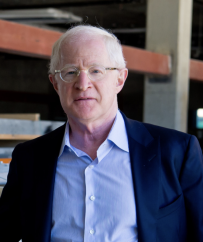
”You can dislike the capital markets. You don’t even have to agree with them. But that’s the world people in real estate live in. And if you can’t find a way to encourage more development, which produces tax revenue, it’s going to hurt—or even sink—the city’s already stressed budget.”
Bill, It’s worth noting that over the almost 40 years of publishing The Planning Report, you are the newsletter’s most interviewed real estate maven. That said, looking forward, (and without knowing whom the Mayor will be), what’s your forecast for Los Angeles’ housing production, especially in its downtown?
Bill Witte: Well, that’s a bit of a loaded question, because LA is so big, diverse, and spread out. I may make a few general comments, but I’ll try to focus on downtown.
As your readers probably know, the Planning Department issued the DTLA 2040 plan for downtown, calling for zoning for upwards of 250,000 housing units. I commented on this during the ULI study, and my comments were these. First, the good news is that downtown has been for some time, and probably will continue to be, the easiest place to build housing and get it approved. For the most part, you’re not impinging on residential neighborhoods—except maybe the growing constituency of people who actually live downtown—and the city is supportive.
But there are two big caveats. One is that downtown, understandably, has been a focus of high-density housing. It’s surrounded by high-density office buildings. From an urban design point of view, that makes sense, but from an economic point of view, I don’t think it does, and the reasoning is really simple: high-rise or concrete construction is more expensive than wood-frame construction—usually 15 to 20 percent more.
And downtown, value-wise, is not West LA. It’s not Beverly Hills. It’s not Santa Monica—ironically, places where you would have a hard time getting this housing approved. I don’t believe there is any evidence that, in the near term, housing of that magnitude, height, and density makes economic sense or is financeable. I understand the capital markets are difficult for anything right now, but we’ve done two high-rises downtown. Even assuming downtown comes back, which it needs to, I’m not sure the economics are there.
So I suggested more of a focus downtown on housing like the two projects we built in Little Tokyo 20 years ago, Hikari and Sakura Crossing, which were six-story wood frame and very dense—almost the same number of units you might get in certain types of high-rise. The practical reality is that they have more of a chance of actually getting built, while still providing dense urban housing.
The second comment I made is about finding some way—and I realize it’s easier said than done—to help finance what I might call workforce housing: housing for people who actually work downtown. Some are service workers, some are office workers, some are public-sector employees. So this is not low-income people, and it’s not high-income people. It’s a broad category. There are definitions out there of what “workforce” is, but it’s an underserved population, because high-rise housing is too expensive, and that’s what has been getting built, to the extent anything has been built at all.
The one thing the city can and should be doing more of—everywhere, I think, not just downtown, and I’ve told the mayor’s people this—is to expedite not just the processing, but the consideration, entitlement, and even financing of publicly owned sites. Some of them are city-owned; some of them are MTA-owned. There you have some control. There you can reduce or eliminate the price of land acquisition.
A common problem—and the MTA is a perfect example—is that they layer on so many other public policy objectives that nothing works. A good example is a project that your old colleague Jay Stark and I worked on for a while in Venice. The MTA does an RFP for a great location, a two-and-a-half-acre site in Venice. It’s understood you probably can’t build high there, but that’s okay. We get to the finals of the RFP—us and one other team—and I look at the RFP, and it says you have to do 25 percent affordability, you have to sign a project labor agreement, and you have to replace the parking. Any one of those could have sunk the project. So we bowed out, leaving Jay, and eventually he bowed out too. Somebody needs to think about how to actually get things done, and not just how to plan for things.
Bill, for comparison purposes – and recognizing that before you began your long private-sector career with Related you served the Mayor of San Francisco and thus know-well how a City Hall works— please elaborate on how a local government best “gets things done”?
Bill Witte: First of all, I’d get an inventory of publicly owned sites—not just city-owned. I know my colleague Lew Horne at CBRE has provided one. That would then require some analysis: How many are suitable for residential? Not all of them will be. Some might be small—well, maybe you can do affordable homeownership or townhomes. It doesn’t have to be 300 units. In other words, you’ve got to do a lot of things to make a difference in the supply-demand problem in housing.
Another thing—and it’s LA—is that I would consult early on with the council members in whose districts those sites are located. It’s easy for me to say, “Screw them, just do what you’ve got to do.” That’s not reality in LA. There already are mandates from the state, some of which these numbers are supposed to respond to, and the city has pushed back against them with limited success so far—it doesn’t have a lot to show for it.
I would then further explore the type of housing, or what could be accomplished, and that’s where the economic reality check comp. For example, if you’re downtown, as I said, I would really focus on the workforce possibility. In another location, it might be something different.
What role do capital markets now play in “getting (housing) built”?
Bill Witte: Well, one of the things you’ve heard many times, I’m sure, about LA in particular is that the capital markets are effectively redlining LA for anything other than purely affordable housing. Partly, from what you hear, that’s because of ULA, the transfer tax—a subject on which both candidates for mayor, Councilmember Raman and Mayor Bass, said early on they were open to reform: maintaining it for expensive single-family homes, but exempting new construction of, say, apartments. That’s been put on ice for the moment. Presumably it appears a ballot measure will be required to accomplish any reform.
That’s number one. Number two, the capital markets look at other things being proposed in LA—for example, requiring union hotel wages at non-union hotels. Even though it’s not housing, they assume, “Hmm, what are they going to do to us if we come in?” You can dislike the capital markets. You don’t even have to agree with them. But that’s the world people in real estate live in. And if you can’t find a way to encourage more development, which produces tax revenue, it’s going to hurt—or even sink—the city’s already stressed budget.
Bill, how have the capital markets changed since 2007/8? What housing development lessons were learned from the responses to the last recession?
Bill Witte: Obviously, 2007, ’08, and ’09 was effectively a recession, for all the reasons that have been discussed. But the markets came roaring back five to 10 years later, and then COVID hit.
Right now, I think the biggest changes are twofold. One is uncertainty. You have, shall we say, an inconsistent leader of the federal government, so the markets don’t know what to expect next, and they don’t like uncertainty. Second, you’ve had inflation in all the cost factors affecting, among other things, real estate. Interest rates spiked significantly. The tariffs have had at least some negative impact on the cost of construction. The cost of insurance, which affects all these properties, has gone way up, affecting operating costs. That’s not an LA issue; that’s a national issue. But when you combine it with the other challenges facing LA, it makes it particularly difficult here.
And I have to say, even in San Francisco today—which, as we keep hearing, is on the rebound, and is in fact doing much, much better—capital markets are still tough, because the returns they anticipate or require don’t show up on paper today. That will change, in my opinion. But it leaves you in LA asking: What can LA do that’s specific to LA—or, for that matter, specific to downtown? Because, as the ULI study showed, there are a lot of things it needs to do.
Compare for our readers what San Francisco is doing now under its leadership with what LA’s leadership is incenting and accomplishing...
Bill Witte: First, my practical caveat: San Francisco is easier. It’s more of a strong-mayor form of government. It’s much smaller—48 square miles, 850,000 people. It was already heading in the right direction, and Mayor Lurie, to his credit, has done a lot to take it even further.
One difference—and it’s not that Mayor Bass hasn’t done some of this—is that he has used the bully pulpit of the mayor’s office. Anybody who wants to do anything in San Francisco, he’ll meet with, he’ll talk to. It reflects back on a mayor I used to work for, Dianne Feinstein, who was very much that way. There was a psychological barrier that needed to be broken, and it has been. That hasn’t been broken yet in LA, although Mayor Bass, I think, has tried somewhat.
But again, you have a very different political situation. Power is much more decentralized in LA. Councilmembers have much more say and control than the Board of Supervisors does in San Francisco. San Francisco is also a city and a county—a rarity—so you don’t have the city-versus-county dynamic.
That’s one thing. The other thing that’s been done—and I’ll go back to downtown LA now—is this. In San Francisco, I think the controller noted that close to 70 percent of the city’s budget revenues come directly or indirectly from its downtown, which had suffered severely from remote work and homelessness, among other things. They’ve really, really gone after that issue: creating a downtown development corporation, funding this, subsidizing that, pushing return to office.
It is beyond me, and every person I know in the real estate community, how the public sector—not just in LA, but certainly in LA—city and state government employees have continued to fight returning to the office beyond maybe two days a week. San Francisco had some of this too. It makes no sense at all, and I think people can’t understand it. Wait a minute—you work for the government. Aren’t you supposed to do what the government tells you to do, within reason?
That has a huge impact on downtown. The ULI study showed that there are 100,000 fewer people in and around downtown LA every day than there were in 2019. A lot of that is remote work; some of it’s tourism. And yet payrolls are at or above where they were in 2019. By the way, some of it, as you’ve seen, is companies moving to the Westside, to Century City, because downtown is too stressed.
If you don’t do something about that, you can zone for all the housing you want, and there will be insufficient demand. That sounds like a crazy thing to say. What? No demand? We have a housing shortage! Guess what: there’s not enough demand for the type of housing that it costs to build. You’d better do something about that if you want to make a dent in downtown.
Bill, in a much earlier TPR interview, as a series of YIMBY housing bills were being debated and enacted by the State Legislature – you shared that Related was building thousands of units in downtown LA—market-rate and affordable—but that, to your knowledge, few if any other housing developers built “affordable” units downtown. Will those now enacted State bills (that both incent upzoning residential neighborhoods & usurp local planning authority) actually produce the affordable housing promised?
Bill Witte: Well, you raise a good point. Even the state, if they’re being honest, would say, “Look, we can require you to zone for housing. We can try to push you to use available resources to create affordable housing. But since most of the land is privately owned, we can’t make you build. We can encourage it, and we can fight against a city like Huntington Beach, which is downzoning. But we can’t make people build.”
And I’ll be the first to tell you: even though we do a lot of affordable housing, without government subsidies, nobody’s going to build affordable housing. Even inclusionary zoning policies, which we have operated under before, are challenging now because of cost. We’re happy to have low-income people in our buildings—we’ve done it more than anyone in the state. It’s just economics.
LACAHSA, the previous housing bond or homeless bond entity, was created to implement that measure. So it’s not that they’re not trying, but I have noted an absence of priorities to guide the industry. In other words, where should these funds be focused? Should there be priorities—for example, publicly owned sites, as I have pushed for?
The reality is, very few places are going to be able to meet their stated affordability goals without government help. Now, there’s the $11 billion housing bond on the state ballot—I think it’s Proposition 1—and polls show it’s likely going to pass. I’m pleasantly surprised there’s no organized opposition, which is unusual. That will help, because it will replenish the state’s coffers, which have been a leading part of financing whatever affordable housing gets built. But that’s going to be a continuing challenge, and you’re not going to be able to look just to the state to meet it.
Re meeting California’s affordability goals, what is your take on Bob Hertzberg’s ‘Middle-Class Homeownership & Family Home Construction Act (Proposition 37) now on the November State ballot?
Bill Witte: I think it also has a good chance of passing. Obviously, most voters don’t really know what all this stuff is. We’re not a homebuilder—we occasionally do high-end condos—but California is probably the least affordable place in the country to buy a home, on a statewide basis. And if you look at LA County, or LA and Orange counties, a starter home is $800,000.
I always say to people now that if you’re a young family, or a young person, you’re not buying a home in coastal California unless your parents help. It’s literally not happening. There are exceptions—people who’ve done really well in tech—but by and large, that is a fact. And so the homeownership rate in the state is dropping noticeably, and that is not healthy.
What Hertzberg’s measure is attempting to do—and alone it isn’t going to do it—is find ways to make homeownership a little more affordable. I’ll point you to something else that just happened, some rare good news: the New California Coalition, which Tracy Hernandez heads and of which Related is a member, just got a bill passed and signed by the governor to exempt townhome development from essentially all government intervention—including CEQA, no labor requirement, no nothing—expediting approval of townhomes. Townhomes are a good entry point for homeownership. And if you pair that with something like the Hertzberg measure, if it passes, I think you can begin to make some inroads.
Bill, in this interview you haven’t mentioned the impact of Hedge fund and institutional investors buying residential housing (for example Blackrouck, in single-family residential real estate in metropolitan areas). It previously has been reported that the aforementioned are the largest owners of homes in metropolitan Los Angeles. The significance of that fact?
Bill Witte: Well, that’s a good question. I remember when this started, back in the debacle of 2006, ’07, ’08, and people were railing against private equity buying up all these homes: Why isn't the government doing it? And I remember thinking, I get that, but only private equity has the resources and efficiency to do it. Otherwise, these homes are just going to disappear. I didn’t think the government was the right call. I’m sure there were some—I don’t know if “abuses” is the word—but some unfortunate outcomes. But I think it stabilized the market.
Is that happening now? Honestly, I don’t really know. I’m not sure. I know equity companies that are doing build-to-rent homes—building single-family homes that are rented, at least initially—and you could say that what BlackRock is doing could lead to some of that. But quite honestly, I’m not conversant enough to tell you what’s happened in those markets.
Aren’t those mammoth equity buyers of family and multifamily housing making it uncompetitive for individual, middle-class, and young buyers to achieve homeownership?
Bill Witte: Yes—particularly when you add the fact that, at least by today's standards, interest rates and mortgages have gone up. And I hesitate to recommend to you the precise measure of regulation that would, if not eliminate that, control it.
The only thing I would say—and believe me, I have nothing to say about BlackRock, good, bad, or indifferent—is that I hesitate to just dump on them, because they’re filling a void that was left because government really didn’t do anything. They took advantage of it. “Filling a void” may be the wrong phrase, but that’s how it happened: they had clear sailing and no competition. Has it gone too far? Maybe it has.
Have you observed if the new equity owners occupy and maintain their properties differently from individual & multi-family homeowners?
Bill Witte: First of all, they hold them as rentals and then to get a return on their investment they have to increase rents as much as the market will bear. And at a certain point, like any private equity fund, they'll look to monetize those assets by selling. Now, I'd like to think that a large company like BlackRock, with a reputation to maintain, would at least adequately maintain those properties and not illegally evict people. I don't know enough about what's happened; those are not markets that we at Related have been involved in. But how much worse, if any, are they than the small owner who owns three of those? I don't know.
Many housing market observers, in the midst of this housing crisis and the responses to it—note that relatively low LA amily & individual incomes explain housing unaffordable. Are local governments able to address the unaffordability of the housing now being planned & built?
Bill Witte: Well, as I said earlier, part of that is that it’s so expensive to build housing, even if you took the profit motive out of it.
Elaborate. Given the high cost of new construction, do today’s buyers in LA as compared with SF have, per capita, the incomes to support the housing that’s now being built – subsidized or not?
Bill Witte: Well, I guess what I would say is this: if you built more housing—and so little is getting built—then rents would probably have to drop, as happened in Austin, Texas, for example, where they actually built a lot, God forbid. But right now… That was my comment about downtown.
Fact Check: The Downtown LA ULI panel, it’s reported, counted 30,000 units being proposed and built at the moment.
Bill Witte: No—not built. Approved, expedited. Big difference. I’ve said to the mayor’s staff, “Look, I applaud the mayor for ED 1 and all these things—30,000, 40,000 units processed. But how many of them are actually getting built?” Not very many. Some of that is a national issue, and some of it’s an LA issue.
But you’re right, in the sense that that’s what I kept saying to the group about downtown: if you build high-rises, we don’t have the incomes—certainly among people who are willing or able to live downtown—to pay the rents, or the sales prices if it were a condo, which is a whole other problem I could get to.
In San Francisco, nothing’s been built recently, and rents have skyrocketed. But again, as you point out, San Francisco has a less diverse economy. It’s a more heavily gentrified city across the board. LA has a much, much larger low-income population, which exacerbates the problem you just described.
Pivoting to the Condo market. What are the unique Condo building challenges?
Bill Witte: Well, there are two. One—and it’s beyond me; the state has mishandled this—is the thing most often talked about: the 10-year liability. You’re going to get sued by the homeowners association and the trial lawyers, blah, blah, blah. That’s a constraint against financing, or even trying to build, condos. You can somewhat insure around it, but yes, it’s somewhat of a problem.
So this past session—I had nothing to do with it—the Legislature unanimously passes a bill that relaxes that somewhat, without disarming homeowners associations. No negative votes. And somehow, at the last minute, the State Senate doesn’t pick it up, and it dies. How can that happen? How is that possible?
They actually ran out of time?
Bill Witte: Well, they ran out of time for everything. Really, somebody needs to ask the Senate pro tem how that happened. That’s number one.
Number two is a more subtle thing. California is one of the few places where condos have ever been built that doesn’t allow for non-refundable deposits. Look at Florida, New York, Toronto, Vancouver: you can get a construction loan based on a significant amount of non-refundable deposits. We’ve actually engaged with the state on that, and it never goes anywhere, because—and this is counterintuitive—the California Association of Realtors opposes it. Now, why would the Realtors oppose it? Well, the stated reason, which I don’t believe, is, “We don’t want poor people to lose their money if things don’t go well.” Oh, well, that’s nice of you. But the real reason, I think—and I’m speculating—is that they think if that happens, they’ll lose commissions, because they won’t be the brokers. I don’t know; you’d have to ask them. It’s very frustrating, because that went nowhere.
So right now, it’s very difficult to finance a condo in California anywhere, even in good locations. We have an approved condo site at Fashion Island in Newport Beach. There is no better location. I’m sure we’ll probably get it done, but it’s not as easy as you would think, for those reasons. And the sad part—going back to Hertzberg and the townhome bill—is that condos in middle-income areas could be a more affordable option for homeownership. But if nobody can build them, that’s off the table. I really think somebody needs to address it.
Bill, speculative question. Given high inflation, and assuming that interest rates continue to rise – “Is constructing new affordable housing in Coastal Southern California possible?"
Bill Witte: Well, obviously, that hurts. Another thing that’s been written about is that existing homeowners who might be sellers have a 2 or 3 percent mortgage. Assuming they’re not disappearing from the market, they don’t want to sell, because then they’d have to be in this more inflated interest-rate market. So it limits the amount of product available, let alone the ability to actually produce more.
Is there another ‘2007-’08-’09’ in our near future, given the capital markets and the markets we have today?
Bill Witte: Well, look, I don’t see a 2008–’09. That was a very different phenomenon. I have to chuckle sometimes, because I remember in the ’90s, when real estate became more institutionalized, with more Wall Street involvement, we were told, “Well, now that it’s more institutionalized—public companies—you won’t have these kinds of recessions, because we’re so transparent.” Excuse me? Who was in charge in ’07, ’08, and ’09? Look what happened. Having said that—couldn’t resist—I don’t see anything like that.
I think the question is that markets like some certainty at the federal, state, and local levels. If they see policies in flux, all over the place, they don’t know what to make of it. So what we find in the capital markets today is that a lot of investors are looking at it like a merchant builder: “Oh, look, we’re going to build, and we’ll get our money out in three years.” Well, in today’s market, it’s very hard to prove that. So you might turn down an opportunity in a very good location that, if you were thinking the way people maybe used to, might be great three or four years from now. But you can’t show that on paper, because things are slower today, for the reasons we mentioned.
So I don’t see an ’07–’08. Look, there can always be some macro events that we don’t know about. And who knows what’s going to happen in the 2028 elections. But most business people I know say, “Look, I just don’t want one party—of either party—to control both the executive and legislative branches. As long as it’s split, it will be harder to get stuff passed, but then nothing bad can happen.” There’s so much uncertainty. That doesn’t mean there’s going to be a real estate recession. Certainly, if interest rates continued to climb, things are going to slow; things are going to stop. But that’s very different from what happened before, when you had overbuying and overselling.
Measures like ULA in Los Angeles are intended to subsidize new builds. What’s your view, as a seasoned developer of new affordable housing - on the value of such taxes?
Bill Witte: One thing we and others have said is that right now, partly because of ULA, investors are redlining LA—the City of LA. And right now, since nobody’s building apartments, for example, there’s no ULA money coming from new construction of apartments. One hundred percent of zero is zero. What funding that is coming is from the sale of expensive homes and perhaps some other transactions. If you exempted, for example, new construction of apartments, or perhaps other forms of commercial real estate, you’d still have money coming in from transfer taxes, but you’d be signaling to the markets that you’re not going to get tweaked if you invest in LA.
Your old colleague, Mott Smith, did the most significant, best presentation on the impact of ULA I’ve seen. When I saw his presentation at a Lusk Center meeting in June, it really laid out the impact in detail. It’s the best analysis I’ve seen. We can all talk about it, but his analysis really shows the impact.
And as I said, there was almost some statewide movement on this. Both mayoral candidates had initially voiced some support for it. All I can say is, whoever gets elected mayor—whether Mayor Bass gets reelected or Councilmember Raman gets there—I hope they bring it up again. Because I can tell you—and again, you can rail about Wall Street or whomever you want to rail against—we have a very tough time getting equity here, particularly when you add in the other macro factors of interest rates and construction costs.
Two more questions. The LA Downtown ULI panel you recently were a part of proposed: a downtown development corporation and a city-only EIFD to quickly lock in today’s suppressed assessed values in DTLA. Your thoughts?
Bill Witte: I like the idea. Obviously, the devil’s in the details. San Francisco has been moving down that path. And that’s the value of some of these ULI panels: you have people from all over the country talking about what’s worked in their cities. They start out by meeting with downtown stakeholders and Councilmember Jurado, who sponsored this, to understand some of the LA dynamics, so you don’t have a square peg in a round hole.
The EIFD approach is a sort of redevelopment light—tax increment light. It’s a way of generating some funds from growth—of course, you have to encourage the growth—which can then help you achieve some of these other public policy objectives. I like the idea.
Lew Horne made an interesting point. He said the people we should be talking to are whoever the buyers of these 15 old office buildings are. If anyone is motivated to have things improved, it’s going to be them. It’s in their economic interest. So I don’t know exactly what follow-up there will be, but I actually like the idea.
To close, Bill. You recently retired from Related and handed housing responsibilities in the West to Gino Canori and Ann Silverberg. Now free to opine without pushback, is there one government action—a structural change, a law change, ect—that would make it easier for your Related successors to deliver in California the promised truly affordable new housing?
Bill Witte: It's not an easy question—one action? And here I go equivocating again. I always say there's no one thing, whether the issue is homelessness or housing supply or something else. There's a myriad of things that I think need to happen, and some of them have. There have been several moves, for example, to either eliminate the threat of CEQA litigation or expedite it. That's already happening somewhat.
Did you leave a letter in your drawer for Gino and Ann when you left?
Bill Witte: No. First of all, I hired both of them—Gino 25 years ago and Ann seven and a half years ago—so I've been working closely with them already, well before they officially took over. I have the highest regard for them. I know how they think, and I know what they're trying to do.
But whatever policy you're thinking about, do no harm. So many things happen here—I cited the MTA example—where you do something that's a good idea: "We're going to build housing near transit." And then you impose requirements that the rest of the market doesn't have to meet, thereby making it difficult or impossible to realize that goal. So the one thing I would say is that every piece of legislation should pass through a "do no harm" review. Don't make it harder. Don't compound the cost problem. I understand you're not going to have no labor standards or anything like that, nor should you. But I do think this state in particular has piled on in so many ways—from the bullet train fiasco on and on—with things that make it costlier and longer. They've made some efforts to change that. I can't think of one policy, because it's too complicated and big. But let's start with that. Let's not make it harder.
- Log in to post comments