


Assemblymember John Harabedian, whose district includes Altadena, Pasadena, and Sierra Madre, has spent much of his first term turning the Eaton Fire's hard lessons into legislation. Speaking with TPR after the close of session, Harabedian reflects on AB 1642, his newly signed bill setting first-in-the-nation standards for testing and clearing smoke-damaged homes, and on why the Assembly let SB 492 die rather than declare "mission accomplished." The Assemblymember also explains why he has changed his mind on undergrounding, and names the one question he says every candidate for insurance commissioner must answer. Read the interview here.
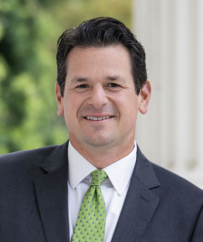
What this legislation - AB 1642- will ensure now is that after the next California wildfire, wherever that is, no family will ever have to guess whether their house is safe when they move back in. ..(A)nd that insurance companies will now have to follow (the Law).
John, please begin by highlighting your legislation this last session in response to the Eaton Fire. AB 1642, one of your Bills, sets first-in-the-nation standards for testing and cleaning up contaminated homes, was just signed by the Governor. Since your constituency is clearly affected by the Eaton Fire, elaborate on the bill’s intent and details.
John Harabedian: After the fires, both in the Palisades and, with the Eaton Fire, in Altadena, Pasadena, and Sierra Madre, thousands of families who didn’t necessarily lose their homes suffered significant smoke damage. Weeks after the fire, once the ash had been cleaned up, residents who had evacuated saw, on a positive note, that while their house survived, they were left without much direction on how to rehabilitate. Their insurance companies made that extremely difficult, because they were not giving these survivors a clear picture of whether their house was contaminated, or safe for their kids, parents, and loved ones to occupy.
We in the legislature were dismayed to find out that the State, having endured many urban wildfires, didn’t have a science-based standard for determining whether a house was safe for occupancy after a wildfire. So we very quickly tried to figure out what we could do, and we thought the simplest thing to do was AB 1642: set a basic, objective standard, based on scientific data, for whether a house is safe to occupy, and actually establish what an insurance company would have to do to test.
What we saw after the fires was a lot of insurance companies saying, “We tested; it’s fine.” Folks then would move back in, do their own testing with their own professionals, and learn their home was clearly not safe—lead and asbestos levels five, 10, 50 times what any human being could safely live with. And that testing typically did not even include the other contaminants that we find in these urban wildfires because of household cleaning products, car batteries, etc.
Fast-forward to the governor signing AB 1642 and finally setting these safety testing standards. No state in the nation has done this. The federal government hasn’t done it. What this legislation will ensure now is that after the next California wildfire, wherever that is, no family will ever have to guess whether their house is safe when they move back in. They will know both objectively, based on the testing, the remediation needed - and that insurance companies will now have to follow under AB 1642 and its partner bill, AB 1795.
So, it’s a big win for fire survivors and future fire survivors, and hopefully it brings some semblance of normalcy and finality to the thousands of families who are still in litigation with their insurance companies over this exact issue.
John, signing into State Law your legislation is a noteworthy accomplishment. But as you have often noted - clearly the intended results depend on DTSC and CalEPA writing the necessary rules and regulations to implement AB 1795. Address the next steps.
John Harabedian: That next step is incredibly important. Most people think that when the bill is signed, you should pop the champagne because you did it. In reality, another fight starts right after the bill is signed: implementing the rules, coming up with the regulations, and making sure the agency in charge is carrying out that process in a way that adheres to the intent of the bill. So over the next year—two years, really—we will be working with DTSC and CalEPA to implement this very quickly, but also correctly.
We have seen it time and time again, and you have seen it: Bills will be passed, and then they will effectively be vetoed by the administration through the rulemaking and regulatory process, where either the agency in charge sits on it and just doesn’t implement it, or implements it in a way that actually doesn’t do anything. As the assemblymember behind the bill, I’m going to take an active role to make sure that doesn’t happen here. I am very honest with people: Until the interim rules are established for lead and asbestos, until the final standards for lead and asbestos are set a year later, and until we have the larger list of contaminants included two years down the road, we are still working on this bill.
And regarding implementation of this legislation, how will who’s elected in November as Governor, Insurance Commissioner, etc. impact the ultimate rules and regulations adopted?
John Harabedian: Sadly, I think it matters a lot who is elected, who’s in charge of the executive branch, and who’s in charge of the Department of Insurance. That’s where policy and politics intertwine, and that’s why these upcoming elections are very important.
Pivoting to a less successful Bill - SB 492, elaborate on the failure of this wildfire liability legislation to pass and the Wildfire Fund framework to be reformed —and both on how you chose to vote, and the possibility of reform next session.
John Harabedian: Roughly six weeks out, maybe even less, from the end of session, the Governor and his team came to the Legislature, both the Senate and the Assembly, and effectively commanded that we do something to reform the system that led to the most recent wildfires and the wildfires before them, as well as the process that follows a wildfire: the Wildfire Fund, liability, etc. He rolled out a term sheet, if you will, of points he wanted the Legislature to address.
In doing so, he effectively got every single interest group—survivors, insurance companies, and the utilities—upset and against the plan he put forward, because it was not a fully baked plan. It was going to hurt survivors. It was going to very much hurt insurance companies. It wasn’t necessarily going to hurt the investor-owned utilities, but they didn’t love it either. At first blush, looking at what the governor and his staff wanted in a bill, it looked like a utility bailout. It was going to cap damages for survivors. It was going to make it harder for them to hire attorneys. It was going to make it hard for insurance companies to subrogate, or get their money back, from the Wildfire Fund. And it didn’t have a whole lot of reform for the IOUs.
Fast-forward to the bill that came forward and what the Assembly did. The bill really didn’t do anything to materially change the status quo. I give the governor a lot of credit for wanting to do something this big, even at this late stage in his gubernatorial career and potentially on the cusp of a presidential run. I agreed with him—many of us agreed with him—that the status quo is broken. We need to change the way we deliver energy. We need to make it safer. We need to make it easier for a lot of this fire-prevention work to get done. And we need more accountability for IOUs when a fire happens.
SB 492 did none of that. In actuality, it didn’t change the status quo whatsoever. The few supposed wins, or changes, in there were actually flawed. There was a fast-track system for survivors, for example, that actually made it harder for them to access justice through the courts. The lesson learned there is: This is what happens when you try to quickly solve a problem in three to four weeks that has been brewing for decades. The final product just didn’t do enough to change the status quo when it comes to the IOUs.
We have to have way more conversations and policy discussions about whether the IOUs, as they currently exist, deserve to exist going forward, and whether that’s the best way to deliver our energy as safely as possible. Beyond that, should the current insurance-industry dynamics persist? Subrogation is a huge issue. It’s very costly. Should insurance companies be able to subrogate against a Wildfire Fund that is paid for, for the most part, by ratepayers? And lastly, are survivors on the best footing after they endure such a tragedy? Across the board, the answer is that we have fallen short on every single one of those measures. Reform—a bill that actually addresses this—needs to hold all those parties accountable and bring some actual change. SB 492 didn’t.
So, the Assembly, after caucusing and having many discussions, decided the best thing to do was stay at the table—not make some proclamation of “mission accomplished,” à la George W. Bush with the Iraq War, and then pretend the work had been done. The work has not been done. We need to stay at the table. We need to continue to talk about this. And I think you’re going to see some big things in this next session that actually address many of these issues.
Last June, in The Planning Report you opined that undergrounding transmission should be the state’s top priority, even at a multibillion-dollar cost. Since then, and after SB 492 failed, you have rethought your position on undergrounding, and also asserted that SCE hasn’t spent a dime investing in Altadena. Speak to all three… and your policy views today.
John Harabedian: It’s offensive to me that Southern California Edison, even after being found responsible —there’s no debate now that the fire came from their equipment. There’s still going to be a legal debate over certain aspects of causation under strict liability and all that. But it’s astonishing to me that now, 20 months after the fire here in Altadena, Pasadena, and Sierra Madre—with Edison having started it—we still haven’t seen a material investment by Edison back into the rebuilding of our community.
You’ve seen them pay out individuals. You’ve seen them go through the court process, where they’re vigorously challenging their own liability and now countersuing local government agencies. They haven’t put $1 into rebuilding the streets of Altadena, rebuilding the infrastructure they burned down, rebuilding the parks. Not a single penny. And they are doing that on the heels of paying out $1.3 billion to their investors in December of last year and giving their executives pay raises in the form of bonuses, increased base compensation, and stock incentives. I find that to be a failure of the system. Shame on them for doing it, but shame on us for allowing that to happen after this type of catastrophic wildfire occurs.
Going back to my view of undergrounding and what we need to do to ensure that Altadena and the surrounding areas don’t burn again: You learn a lot after these fires. Right after the fires, there was a call from a lot of people, including most Altadena residents: “We’re not going to move back into Altadena unless you underground all the distribution lines.” Although it was a transmission line that caused the fire, they didn’t want to be subjected to future fire risk, and they felt Edison should be paying for the undergrounding.
The reality is, ratepayers pay for undergrounding. And the reality is that undergrounding, in many ways, is not needed. The more you learn about this—and that includes me—the more you see that you can insulate power lines above ground, which eliminates about 95 percent of the fire risk. Undergrounding ostensibly eliminates 99 or 100 percent of the fire risk, but you can insulate aboveground lines for a fraction of the cost and really take care of the fire risk.
So, I am now of the mindset that undergrounding, in many ways, is not necessarily the pathway forward, because, one, it’s going to cost us a hell of a lot more. Ratepayers are going to be stuck with huge bills in exchange for maybe a fraction more wildfire safety than they could get by insulating the lines. And what that means is that the IOUs are going to make a ton of money off undergrounding.
Frankly, what you’ve seen, David—and this is a longer conversation—is that building out transmission has been the biggest source of profits for IOUs, because we give them cost-plus. We give them a return on equity on whatever they build; the PUC effectively gives them a mandated rate of return. As transmission building has slowed, where we’ve seen most of the profits, most of the costs, and most of the rate increases is in distribution—the poles and the wires in our communities. They have a monopoly on that, to the point where they can do pretty much whatever they want and spend as much as they want, and we have to give them that cost-plus. Undergrounding increases that cost in such an extravagant way that I think, in the long run, it’s not what we should be doing.
It’s a good example of being in the job, learning about the substantive policy area, listening to people who probably know more than you do, and changing your mind.
Pivoting to Virtual power plant deployment: The governor vetoed a bill——AB 740, last October, finding it didn’t fit the CPUC’s resource planning process. Is there State support for incenting distributed energy resources - for virtual power plant deployment?
John Harabedian: Distributed energy resources, generally, are anything from an electric vehicle you plug into your house, to a smart thermostat, to a battery in your house. All of those are resources we call DERs—distributed energy resources—that can be used to actually power the grid and meet our resource adequacy, the amount of energy we need on the system to power our lives. And we don’t utilize that in a real or thoughtful way.
Virtual power plants would really just institutionalize a structure to not only get that energy onto the grid so that we can utilize it—it’s already there—but also reduce the amount of transmission, distribution, and other generation that we have to build at great cost, and make the system more efficient and cheaper for everyone. That’s what the virtual power plant bill, AB 740, was trying to do: effectively utilize the clean energy that’s already there, so that over the long run we can stop spending unnecessarily on infrastructure we don’t need.
The governor vetoed it, even though he had called for more effective measures to lower ratepayers’ costs—this would have done that—and to bring more clean energy onto the grid, or harness that clean energy. This would have done that, too.
The reality is that the IOUs hate virtual power plants. They hate distributed energy resources, because the more we utilize them to meet demand, the less they need to build—and the less they build, the less profit they make. Again, they make profit off building things, whether it’s transmission, distribution, or generation. They do very little generation now relative to what they used to do; they’re basically transmission and distribution companies now. They don’t want to build less. Their workers don’t want to build less. They want more projects in the pipeline, and they want to build, build, build.
We, as policymakers, don’t disagree that we still have to build things. The grid is not where it needs to be to support 100 percent electrification, which we’re supposed to reach by 2045. However, there’s a lot of electricity on the grid in the form of DERs that could be harnessed by virtual power plants, and we are not harnessing it in an effective way. My bill and a few other bills would have done that. He vetoed all of them. With the next governor, hopefully we see less industry capture and more vision about what the next generation of clean energy looks like. I think it’s going to be you, me—residents who have a lot of clean energy resources at their fingertips in their houses—actually being a bigger part of the grid.
The California Legislature this last session attempted to address the concerns of: fire survivors, homeowners, as well as insurers. Your constituents surely understand both how underinsured most are and how many are struggling with post fire mortgage payments. Insurers are threatening to leave California. Share how, with your leadership, the Legislature is addressing all these pressing & related concerns.
John Harabedian: I think every homeowner in California is now underinsured—objectively underinsured—because the cost of rebuilding homes has gone up at a pace that the replacement levels in most insurance policies haven’t kept up with. Most homeowners probably know that, but most don’t really care, because “I’m not going to lose my house. I’m not going to see a flood or a fire or an earthquake take it out.” Probably nine out of 10 people have that view.
These latest wildfires have made people really rethink that. Now that we’re seeing a California where there’s no such thing as a fire season—it’s going to happen pretty much throughout the year, and it can happen anywhere—people are really focused on how much replacement value they have for their home. And I think people are pissed that they’re underinsured. People are upset: “Why didn’t the insurance company tell me that I was underinsured?”
We tried to come up with a bill that would have solved for that, and we realized it’s very hard to solve for. You can come up with a bill that says the insurance company has to give you notice that you’re, quote-unquote, underinsured. Well, who’s going to determine that? What is full insurance? What is technically underinsurance? Who’s going to make that financial determination? That’s one question—and you could solve for that. Second, what are you going to do? Put a piece of paper in the stack of paper that a policyholder gets anyway, that just says, “You’re underinsured by this much”? Does that really solve anything? And third, to the extent that people did know they were underinsured, are they willing to pay for more? People can’t afford their insurance as it is. So, if you solve for determining whether people are underinsured and giving proper notice, do people even really want to spend more? We haven’t come up with a solution on that yet, but we’re going to continue to look at it, because we do think this underinsurance problem is a real problem.
It’s why we passed the mortgage forbearance laws: People are running out of money. The recovery has really brought people to a place of financial despair. You see most survivors now running out of all their savings, taking out loans, and putting the expenses of rebuilding their homes on credit cards. The state has no money to just give them directly; we don’t have billions of dollars for grants and free money. The federal government has held back the billions of dollars from FEMA that we need. So the easiest way of keeping people financially secure is keeping money in their pockets.
The whole idea behind mortgage forbearance is that you get to delay your mortgage payment for a year—now up to two years. The money you keep in your pocket by not spending it on your mortgage, you’re going to have to pay back in the future. But use that money right now to meet the need of rebuilding your life, because there’s a gap to bridge: You are underinsured. The insurance isn’t enough. While you might be able to build a sufficient home with the insurance proceeds, you’re going to need a little bit more to do whatever it is you need to do. So the mortgage forbearance bills really do try to address the underinsurance issue, which is persisting, and they do it in a counterintuitive way: Just keep money in people’s pockets instead of giving them a check that doesn’t exist.
You proposed a state-led disaster housing task force to quarterback recovery, and a financing tool to help community groups buy burn lots in Altadena. Elaborate.
John Harabedian: I think it’s really unfortunate that that bill wasn’t signed into law. You still see government agencies—federal, state, and local—not coordinating like they should. There continue to be survivor groups and residents trying to get through the bureaucracy of rebuilding, and whether it’s in the Palisades or here in Altadena, a lot of people don’t know who’s in charge. Government is really bad at talking to itself. You have to institutionalize ways in which government agencies can work with each other efficiently.
The task force would have done that, and I think it was a big swing and a miss for the state in showing real leadership on rebuilding. Time and time again, in the face of a catastrophe or disaster, the state has ceded too much power to the federal government. We do that for various reasons. But I think the future, especially under federal administrations like this one, is that the state needs to lead more. Creating this task force would have shown leadership, and we didn’t do it.
Before we conclude: Given the significance of what you’ve addressed here—re the insurance industry, the needs of homeowners and survivors, etc.— to date the State Insurance Commissioner run-off contest reporting seems to be almost nonexistent. One of the candidates capitalizing on voter frustration and anger shouts: “Blow it all up; it doesn’t work.” The fact that if you blew it all up, ratepayers and taxpayers would be the backstop - seems to be unimportant. How then do you & civic leaders generate a more substantive conversation, given the existential importance of truly managing insurance risk?
John Harabedian: You have to be economically rational when it comes to the broken insurance market we see in our state right now. The way you fix a broken market, effectively, is to incentivize more supply—in this case, more companies writing insurance policies that actually work. We don’t have that in California. We have insurance companies that have retreated, which creates less supply of insurance policies and leaves the consumer, the policyholder, in a worse place.
Anyone running for insurance commissioner needs to answer one question: How do you make it more attractive and more sustainable for insurance companies to insure the average California homeowner?
Within that question and answer, you need to answer big questions, like: What is the future of home insurance as it applies to wildfire? How much should an insurance company expect to make on an average policy in California? And thirdly, very importantly, how much should an average California homeowner be expected to pay? We don’t have good answers to those. We have the Sustainable Insurance Strategy that the current insurance commissioner rolled out a couple of years ago. It hasn’t really taken effect.
But going back to what I led with: This is a market. It’s a regulated market, but how do we get more insurance companies writing fair policies that actually help people? You certainly aren’t going to do that by making it harder on insurance companies. And there is a balance here. Insurance companies need to follow the law. They need to treat their policyholders legally and with respect and humanity. But you also need to make sure there are more insurance companies swimming in the pond, because that’s ultimately going to benefit all of us. The fewer insurance companies you have here, the more abuse and the higher rates you’re going to see, and the less effective the market system. So, I think blowing it up is shortsighted. I don’t think that will work. I do think you need to have a conversation about how the state steps in and takes over for the failed FAIR Plan. That is something the insurance commissioner is going to have to do as well.
To close on a more positive note…. At the end of the legislative session, the budget that was signed by the Governor includes a number of grants to arts and cultural institutions in your district & impacted by the fires. Are there details on the awards that you can share?
John Harabedian: We’re very excited about some of the budget wins we were able to secure with the help of our speaker, Robert Rivas, and the budget chair, Jesse Gabriel.
One of the allocations we’re most proud to have fought for was a material amount of money for the Sierra Madre Playhouse.That money will go toward sustaining arts and culture in the district, restoring a historic building, and ensuring that our kids, and the community at large, will be able to continue to enjoy a cultural asset that has been underinvested in for decades.The Sierra Madre Playhouse used to have a capacity of nearly 1,000 seats. It now has roughly 80 seats. It was a playhouse that used to put on a new production every month. Now it’s a performing arts center that does a lot more than just theater, and it has really evolved thanks to the leadership of David Gordon. The money the state was able to unlock for this historic asset will hopefully make sure the Sierra Madre Playhouse really thrives over the next few decades.
- Log in to post comments