


In conversation with TPR, Los Angeles Unified Schools District (LAUSD) Board Member Nick Melvoin reflects on the structural challenges shaping the future of the nation’s second-largest school district. Melvoin discusses the fiscal implications of one-time federal ESSER funding, the pressures of labor negotiations in a high-cost region, and the long-term sustainability of a district that now serves roughly 400,000 students—down from nearly 700,000 two decades ago. He also addresses the need for strategic planning, the political difficulty of consolidation within LAUSD’s facilities portfolio, and the district’s growing role in climate resilience, from electric bus fleets to campus infrastructure upgrades. Looking to 2030, Melvoin argues that maintaining continuity and shifting decision-making closer to individual schools—while consolidating operational systems—will be critical to stabilizing and modernizing the district.
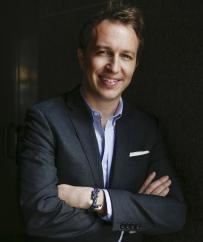
"At some point someone has to step back and ask: times have changed—who is advocating for the students and the taxpayers?" - Nick Melvoin
Nick, you’ve served on the LAUSD Board since 2017, including as Vice President.
For readers unfamiliar with the scale of the district, introduce yourself and the Board’s role in overseeing LAUSD.
Well, it’s a pleasure to be here. Thanks, David, for having me. LA Unified is the second-largest school district in the country, second only to New York. But it’s by far the largest district governed by an elected school board. Major cities like New York, DC—and until recently Chicago—have mayoral appointed school systems. LA Unified, by contrast, is governed by a seven-member elected Board.
My career actually began as an LA Unified teacher. I’m LA born and bred. I came back after college and started teaching. One thing I didn’t realize at the time was that the Mayor of Los Angeles doesn’t control the school district. LA County has 88 cities and 81 school districts. LAUSD is by far the largest, encompassing 25 cities.
I represent mostly the City of Los Angeles but also the entire City of West Hollywood and a couple unincorporated areas of LA County. Altogether the district spans about 710 square miles, serves roughly half a million students, employs more than 80,000 people, and manages a budget larger than the GDP of many countries. The district is governed by seven elected Board Members. I represent most of the Westside and the West Valley. Together, the seven of us appoint the superintendent—the equivalent of a CEO—to run this behemoth of a school district.
It’s unique because most school boards around the country operate more like part-time roles—one night every couple months in a school gymnasium. In LAUSD, it’s a full-time job. I have a staff of six, and the superintendent reports to the seven of us who sit alongside other governing bodies in the region—the 15-member City Council and the five-member Board of Supervisors, which will soon expand—and sometimes share jurisdictional issues.
In light of the recent federal raid on district headquarters, how do those responsibilities translate into day-to-day governance and oversight?
Our primary job is to hire, fire, and manage the superintendent, approve the district’s budget, and set policy. During my tenure we’ve tried to clarify those roles so the Board focuses on policy and vision while the superintendent handles execution. As you alluded to, it’s been an interesting week—although frankly, I’ve only known interesting times since being elected.
The Board voted unanimously to place Superintendent Carvalho on paid administrative and named Andres Chait as Acting Superintendent. Chait is a lifer in the district—a former teacher and principal. His wife is a teacher, and he’s a district parent as well. Most recently he served as our Chief of School Operations. He’s a great leader who can keep the trains running and is widely respected across the district.
LAUSD now oversees more than 1,500 facilities, educates roughly 400,000 students, employs over 80,000 personnel, and manages a $12 billion budget. Stepping back from day-to-day operations, what major challenges today most shape the district’s trajectory going forward?
Over the last few years, one of the issues has been the infusion of one-time federal cash, mostly ESSER dollars—and additional funds we received as a result of advocacy I did in Washington around FEMA reimbursements for our COVID testing program.
The Board, in setting the district’s budget, has been deciding how to responsibly deploy that one-time money across a system where roughly 92% of the budget is spent on personnel—ongoing costs. As a result, we’ve spent a great deal of time thinking about the long-term sustainability of the district’s finances. At the same time, we are continually negotiating with labor. At any given moment we’re working with eight or nine unions, and contracts are regularly being reopened.
A central question is how we fairly compensate our workforce—especially given the cost of living here in Los Angeles—while still maintaining a financially sustainable district.
Another major issue is strategic planning. For nearly two decades the district was operating without a real strategic plan. Establishing one was a major priority for me. We now have a plan in place and are executing against it, and over the next year we will begin preparing to renew and update it.
Despite the events of the last few days, the central question remains how we think about the district’s direction through 2030, particularly continuing the academic recovery of students following COVID.
There is also a structural reality the district has not yet fully addressed: LAUSD today is not the district it was twenty years ago. We’ve lost hundreds of thousands of students. That trend isn’t unique to Los Angeles, but we have not fully adapted to it—especially when it comes to our facilities footprint. As you noted, despite operating nearly 1,000 schools as one of the largest landowners in the county, we’ve never undertaken a serious consolidation effort. Even within campuses there’s plenty of opportunities to reduce utility and maintenance costs.
Those are difficult conversations politically and emotionally, but if we want a sustainable district—and want to serve the students who are here today, roughly 400,000 rather than the 700,000 we once had—those conversations are long overdue. That’s an issue I’ve been trying to lead on.
Share the education and professional experiences that inform the perspective you bring to the Board’s strategic planning deliberations.
My background has been fairly varied, and I started as a LAUSD student myself. Later, I attended an independent school. In the 1990s a lot of people felt the district was heading in the wrong direction and began looking at alternatives.
After college I came back to Los Angeles and began teaching during the Great Recession. I graduated on a Thursday and started teaching summer school the following Monday, but not long after that, I actually ended up suing the school district on behalf of my students.
Because of the recession the district was laying off teachers, and layoffs were determined strictly by seniority—last in, first out. My school in South Los Angeles was being decimated by those layoffs, and that experience gave me a crash course in advocacy. It was also when I first learned a school board existed, because testifying in front of them. I remember thinking three minutes of public comment was nowhere near enough time. Now, sitting on the other side of the dais, I sometimes think three minutes can feel like a very long time.
That experience pushed me toward law school. I studied law and later worked for Mark Rosenbaum at the ACLU. During my second year I spent a summer working in the Obama White House doing policy work. After that, a group of parents encouraged me to run for the school Board, and I was elected in 2017.
I bring several perspectives to the work—as a native Angeleno, a former LAUSD teacher, a lawyer, and someone who has studied education policy and finance. While teaching, I completed a master’s in urban education and later earned a certificate in education finance at Georgetown.
Beyond those credentials, I’ve simply been observing the district my entire life. Drawing on those different vantage points, and bringing in the right people—has helped guide the district’s strategic planning process.
Five years after the pandemic coupled with student enrollment declining and the District’s long-term fiscal obligations mounting—what does meaningful recovery look like? Also opine on whether LAUSD is currently measuring the right signals of student progress?
Some news that was understandably eclipsed this week, the CEO of the College Board had just flown to Los Angeles for a press conference highlighting something we’re very proud of: LAUSD is leading the nation in both AP class enrollment and AP passage rates. One indicator, but it reflects real academic progress.
We’ve also been leading the state in terms of academic improvement on standardized assessments. In fact, Governor Newsom, in his State of the State address last month, pointed to LA Unified as a district others should look to because of the progress we’re making. I do believe we’re moving in the right direction. We’re investing heavily in early education and early literacy, and we’re expanding career technical education programs. I want every student to have the opportunity to pursue college, but many students will choose a different path, and we need to ensure those pathways are available and respected.
That said, we still have a long way to go. I often remind my colleagues that while growth matters, we also have to look at absolute proficiency. Our growth trajectory is strong, but we still need to ensure that more students graduate truly college- and career-ready. That’s why, whatever ultimately happens with the superintendent and the investigation surrounding it, it’s critical that we remain focused on the work itself. That responsibility falls to the Board—and to the district’s leadership as well.
Looking back, how would you compare what you gained from AP courses and traditional academics with what you’ve learned through life experience?
For me personally, definitely more the latter. AP classes helped sharpen my reading and writing skills in high school, which prepared me well for college. Because of that, I was able to focus on other things—student government, the Institute of Politics, and broader civic engagement.
But honestly, the most valuable learning has come from experience. That’s probably an ironic thing for me to say, but my time teaching, working in policy, and navigating crises has shaped me the most. Over the years this job has been something of a trial by fire—dealing with a Board Member indictment, the COVID pandemic, wildfires, multiple superintendents, and countless operational challenges. Those experiences have been incredibly formative.
When it comes to AP courses, though, the reason I was proud of that district accomplishment is twofold. First, access. In a district where about 85 percent of students live in poverty, ensuring that students have access to the same rigorous coursework available in private schools or affluent districts is fundamentally an equity issue. Second, the economic impact. If students pass the AP exam, they earn college credit. The CEO of the College Board noted during that press conference that students in LAUSD are saving thousands of dollars in college tuition because they can potentially graduate in three years instead of four.
There’s a real equity component there, but to your earlier point, experiential learning has been incredibly valuable, and we’re expanding our technical education programs. The pendulum swung too far for a while toward the idea that everyone must go to college.
Now we’re recognizing that there are excellent careers in the trades, manufacturing, and other industries that cannot be outsourced and don’t necessarily require a traditional four-year degree. Our goal is to prepare students for those opportunities as well.
Let’s pivot to another issue facing the Board. How is LAUSD responding to increasing climate volatility—both in terms of daily operations and long-term resilience planning for district facilities?
This is an area where the Board has really tried to lead, particularly on climate and sustainability goals—even before the recent fires and dating back to early in my tenure. As I mentioned earlier, we are one of the largest landowners in the county, and we’re also the largest transportation provider outside of Metro. At that scale, even small operational changes can have significant impact.
For example, we now operate the largest electric school bus fleet in the country—and possibly the world. We’ve also installed the largest outdoor air-quality monitoring network of any school district globally. Across our campuses we manage thousands of acres of asphalt, and we’re looking at replacing portions of that with grass and other climate-resilient infrastructure.
Our buildings also offer tremendous opportunities—from rooftop solar installations to battery storage and other energy systems. I remember speaking at a VerdeXchange conference years ago about how schools could serve as community resilience hubs—places with solar power and battery storage that could support neighborhoods during emergencies.
Some of these investments simply make good business sense. Others strengthen community resilience. And many are directly about student health and safety.
One of my priorities has been something as simple as shade structures on playgrounds, but regulatory barriers are surprisingly high. Because of code requirements, the average cost to install shade is now $400,000+. That’s hard to justify for taxpayers, so we’ve turned to the state.
During my tenure, we also passed two major bonds—Measure RR [2020] and Measure US [2024]. Measure US was the largest school bond in American history at $9 billion, and climate resilience was a central component of that measure, before the major wildfires earlier this year.
Did investments in resilience survive the Palisades fire?
Well, some of those schools were nearly a hundred years old. As we rebuild the two elementary schools and portions of Palisades High, we’re designing them to be far more climate resilient.
But broadly, about a billion dollars from the bond program is earmarked specifically for resilience projects across the district. That means whenever we replace a roof or renovate classrooms, we now evaluate climate resilience as part of the project. We’ve also created a Chief Sustainability Officer position to ensure investments are proactive, not reactive.
Turning to workforce issues, what challenges does LAUSD face in recruiting and retaining teachers, and what structural barriers complicate building a sustainable workforce?
There are several. One challenge is that the traditional compensation model for teachers is somewhat antiquated. Historically, teaching was a profession where individuals might rely on a two-income household and remain in the job for decades. The system was designed around slightly lower take-home pay but strong lifetime benefits, but the workforce and cost of living has changed dramatically—especially in Los Angeles. For some younger teachers, the promise of health benefits decades from now is less compelling than higher take-home pay today to actually afford housing.
We’re looking at ways to rebalance compensation—front-loading salaries while still maintaining long-term benefits. Pensions are determined at the state level, but we’re exploring approaches to health care and compensation structures. Housing is a major barrier, and one of the most consistent concerns we hear from teachers is the cost of living in Los Angeles.
Given the district’s footprint, we’ve begun developing workforce housing on district-owned property, and so far, we’ve completed three affordable housing projects for educators, and four additional projects are currently out to bid. Interestingly, the housing challenge affects both ends of the district.
In Watts, it was difficult to recruit teachers because those schools were perceived as more challenging environments. At the same time, it’s nearly impossible to recruit teachers for schools in areas like the Palisades, Bel Air, or Brentwood because housing there is simply unaffordable.
Teacher housing is one strategy to address that imbalance. Combined with higher early-career salaries, we hope these changes make the profession more attractive to people entering teaching.
Considering the scale of the State’s Education Code, its dominant role in funding public education, and the influence of education labor unions over policy, what would meaningful reform of LAUSD actually look like?
Yes, it’s definitely complicated given the many layers of regulation you just described. If we were on camera, I’d actually hold up a prop I keep on my desk—the California Education Code—to show people the sheer amount of red tape we operate under.
This also ties into charter schools. The original promise was freedom from much of that regulation. When I talk with critics of charter schools, I often say the best way to eliminate charter schools would simply be to give districts the same flexibility charters have. Charter schools are exempt from about 90 percent of the Education Code, and we have more than twenty years of evidence of some very successful charter models operating under that framework.
My pitch to the Legislature every year is: free us.
Let’s start over and rebuild the Education Code. If it takes 3,200 pages just to govern things like when the school day begins or how long a break can be, then we’ve gone far beyond common sense governance. Layer the teachers’ contracts on top of that, and you end up with nearly 6,000 pages of rules governing everything—from who can use the bathroom in the principal’s office, which is literally in the contract, to when the school day begins.
One of my priorities has been seeking waivers where we can, renegotiating where possible, and trying to modernize the system. Much of the Education Code and many contract provisions are the result of decades of special interests advocating for narrow concerns, and I don’t say that pejoratively—over time, the layers accumulate. For example, as these different interests require certain labor rules, engineering requirements, construction standards, and so on…now you have a structure that costs $400,000 just to shade a playground.
At some point someone has to step back and ask: times have changed—who is advocating for the students and the taxpayers? We’re trying to reassess fifty years of accumulated regulation so that providing something as basic as shade for students isn’t financially absurd.
So yes, it’s challenging, but we try to build coalitions where possible and push the work forward despite a very restrictive environment.
Nick, would it be fair to say that most voters served by LAUSD—spanning 25 cities across Los Angeles County—rarely have the opportunity to engage with the governance discussion you just described?
That would be very fair to say and honestly, I don’t blame people. Most folks are busy with their day-to-day lives. Governance reform, Education Code reform, or structural changes to how school systems operate aren’t exactly headline-grabbing topics, but I think we’re going to see more discussions in the coming years because it’s becoming increasingly difficult to get things done.
When parents ask why their school can’t implement something they want, and I explain that it’s due to state law or Education Code requirements, they suddenly become interested. I tell them to email their state senator or assembly member, but a level of explanation has to happen first, and it rarely makes the evening news.
That raises a related question. What is the educational or governance rationale today for maintaining a unified public school district the size of LAUSD?
I think there are two ways to answer that. I’m often asked whether LAUSD is too big to succeed—or too big to fail. Back in the early 2000s during a mayoral debate, Bob Hertzberg proposed breaking the district up, while Antonio Villaraigosa argued that the mayor should take control. Villaraigosa did eventually get legislation passed to do that, but it was invalidated by the courts, and we’ve been in something of a policy stasis since then.
Looking nationally, there are examples worth considering. Florida has around sixty counties and sixty school districts. California has over a thousand school districts, and eighty-one within LA County. There’s certainly an argument that certain functions could be consolidated—transportation, procurement, food services—because the duplication of administrative systems across districts is significant. But the approach I’ve tried to advance is making the most important unit in the system the school itself, not district headquarters. I’ve even proposed selling the Beaudry building.
In my ideal structure, instructional decisions would move closer to the school level, giving neighborhood schools greater autonomy over programming and instruction. At the same time, other services could be centralized at a larger regional or county level.
Many smaller districts historically formed when communities sought to separate themselves from LA Unified, often around issues of integration. One of the benefits of a district like ours is the extraordinary diversity it brings together, and the challenge is preserving diversity and equity while becoming more thoughtful about governance and operations.
To conclude, and looking towards 2030, what single strategic Board decision will determine whether LAUSD stabilizes and Students thrive?
I have to say that, right now, it probably depends on what happens with the superintendent ...the events of last week were a shock. Superintendent Alberto Carvalho had actually just become the longest-serving LAUSD superintendent in twenty years after reaching the three-and-a-half-year mark, and the Board had unanimously extended his contract for another four years. That leadership stability, combined with clarity and a strategic plan has been extremely important. Whether he remains in the role or not depends on factors outside of my control.
But, regardless of who serves as superintendent, the critical issue will be maintaining stability around the district’s strategic direction. We now have a plan and a sense of where we’re going. The worst thing we could do would be to throw that plan out and start over again; a cycle of constant resets has defined much of the past few decades in LA Unified, and continuing to invest in the existing plan and accelerating progress will be essential.
To answer directly, stability is what will determine whether the district succeeds.
- Log in to post comments