


As California continues to confront a deepening housing affordability crisis, state leaders are reevaluating how to expand access to homeownership beyond traditional low-income housing programs. Sacramento Mayor and former Senate leader Darrell Steinberg highlights Bob Hertzberg’s proposed 2026 ballot initiative—a $25 billion middle-class homeownership revenue bond—as a groundbreaking market-based solution to close the gap between subsidized affordable units and costly market-rate homes.
By Darrell Steinberg, former Mayor of Sacramento and former President pro Tempore of the California State Senate
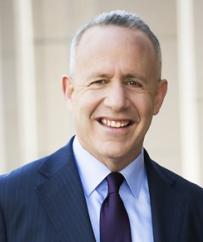
“Housing all Californians is not an insoluble problem—but it requires blending public and private leadership, new financing models, and moving beyond one-size-fits-all solutions.” - Darrell Steinberg
California’s system of subsidizing the development of affordable housing helps many people and falls far short of addressing the state housing crisis. The byzantine process of competing for limited tax credits, adding dollars from a half dozen or more state and local funding sources, is great for the lower-income families who both qualify and are lucky to be high up on the priority list. But there is not enough public money, and too many individuals and families are too low on the long wait lists.
It’s inspiring to see some leaders try new and bold approaches. Along comes former California Senate Majority Leader and Assembly Speaker Bob Hertzberg. His 2026 ballot measure would offer brand-new support for construction of middle-class ownership housing for first-time buyers. His market-based solution is a vital strategy to help begin to bridge the gap between subsidized affordable housing and unaffordable market-rate options.
I served with Bob for years and watched his public service closely. He is unwilling to accept a status quo that has provided no viable housing solution for the middle class in the Legislature.
The Hertzberg revenue bond is completely different from the current legislative effort to craft a $10 billion affordable housing bond. Both are worth passing and needed to assure more homeownership and rental opportunities for California families.
Here’s how the Hertzberg bond would work:
It focuses exclusively on homeownership for middle-class individuals and families. The Hertzberg Act only applies to new construction—its intent is to increase supply and affordability. The main benefit to the new middle-class home buyer is a 3% down payment program.
For example, on a $700,000 new home, a traditional 20% down payment would be $140,000. Under this program, at 3%, the cost is brought down to $21,000. That makes it possible for families who could otherwise afford a mortgage but not the upfront cash.
The Act defines a middle-class person as someone making up to 200% of the Area Median Income, which averages about $193,000 statewide, though it varies by county. A middle-class home is defined as 125% of a federal benchmark, so roughly $1 million. In some counties, that’s closer to $750,000; in others, it could be $1.2 million.
The Act further limits the role of too many well-intended government agencies that overwhelm the buyer with paperwork. In this case, the Act authorizes private banks to handle all the paperwork and provides them a half-point origination fee to do it. It’s just like when you buy a car—if there’s a rebate, the dealership takes care of the paperwork for you. Same idea here.
The financing structure is unique. After the buyer pays a 3% down payment, they assume a standard 80% loan from a bank and take a second loan at 17% funded by revenue bonds. The state issues those bonds, private investors buy them, and the proceeds are loaned to buyers.
It’s important to note there’s no taxpayer risk—there’s no full faith and credit of the state behind them. If someone defaults, the bond buyer takes the loss, not the public. CalHFA would administer the program.
Importantly, there also are no restrictions on buyers. If they had a house and lost it—they are still eligible. If they sold a home—they are still eligible. This isn’t about restricting access; it’s about helping middle-class buyers get into new homes and finally building the ownership housing stock California desperately needs.
The Act smartly eliminates one of the biggest disincentives for developers to build middle-income ownership housing in the first place. It requires that all homes built under the Act have a right-to-repair requirement before construction defect litigation can be commenced.
The Act also ensures appropriate labor standards—not minimum wages, but standards that make sure people are paid properly.
The $25 billion bond fund will be secured by second trust deeds on loans to middle-class homebuyers. That fund finances 17% of the cost of new middle-class home construction.
As the 17% loan is paid back by the homeowner, the money can be loaned again and again as more loans are paid off. This revolving fund means that the initial $25 billion bond will generate many multiples of the original $25 billion for more new housing construction. This framework incentivizes developers, and at the same time, it makes it easier and realistic for people to buy a home.
Who will buy the revenue bonds?
Hertzberg has already approached California philanthropists who are signatories to the Giving Pledge, as well as social impact funds, banks, corporations, and other philanthropic institutions, to ask them to buy the bonds at a discounted rate of a 3% return.
As a result, both the conventional bank loan and the second trust deed under this program make the combined mortgage payment for the new homebuyer much more affordable. These are like war bonds, because, as Senator Hertzberg says, this is a war for the middle class.
Hertzberg is creating a large, diverse coalition of support from business and labor. As a former mayor and state legislative leader, I believe strongly that housing all Californians is not an insoluble problem. It requires combining the best of the public and private sectors. It requires a willingness to create new models of finance. It requires us admitting that the one-size-fits-all approach to affordable housing helps many but is often too cumbersome and does not reach enough families.
I hope this Act passes overwhelmingly and believe it will. It is not every day the voters get the opportunity to say yes to tens of thousands of new privately financed homes with no cost to the taxpayer. We must not be afraid to break through the inertia that leaves too many hardworking people without the opportunity—and the generational benefits—that come with homeownership.
-
Editor's Note: For more information, see our interview with Bob Hertzberg, “Keeping Our Children in California: Hertzberg on the Middle-Class Homeownership Act.” The California Secretary of State has issued an official title and summary for the proposed initiative, “Creates Loan Program for Middle-Income Buyers of Qualified New Homes. Authorizes $25 Billion in Bonds,” which outlines eligibility, income limits, and program structure. Additional recent reporting on the campaign’s signature submission and projected November 2026 statewide ballot placement is available from regional and statewide outlets, including coverage of the measure’s $25 billion bond size and the approximately 900,000 signatures submitted—well above the 546,651 valid signatures required to qualify.
- Log in to post comments