


The Planning Report features a conversation with John Withers, member of the Irvine Ranch Water District board since 1989. Since that appointment and subsequent re elections , Withers has held many positions related to water and sanitation in Orange County. Now, five years after Withers became OC San's Board Chair, we reconnect with him to ask how Orange County's water and wastewater agencies have changed/evolved. Obviously, affordability pressures are mounting, federal and state PFAS rules are diverging, and LA Metropolitan is rethinking how it pays for its water wholesale system. Read the interview below for his exceptionally well-informed responses.
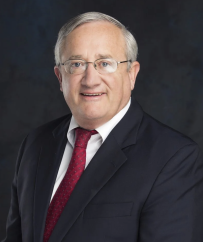
“When state and federal regulations diverge, compliance ultimately leans toward the most stringent limits (…) come January, federal standards will take another flip. So I think smart agencies are planning around the more stringent limits…”
In 2021, as OC San's new Board Chair, you shared with TPR that every OC San infrastructure investment needed a business case, and you made “trust” the theme of your chairmanship. Now affordability and rates dominate the debate. In response, has the business case changed, and how do you keep the public's trust while asking ratepayers to fund the next round of needed projects?
John Withers: From my perspective in Orange County, I don’t think anything has changed in terms of making a business case for the investments an agency is going to make. That’s particularly true when you have 25 member agencies, as OC San does: 20 or 21 cities, a handful of wastewater agencies and the County of Orange. They all have to buy into what you’re doing. Communication, transparency and, most importantly, doing what you say you’re going to do: that’s how you maintain trust.
The Orange County Sanitation District is running in fine form right now. Of all the public agencies in Orange County, it enjoys one of the highest levels of public trust. It is very engineering-driven, and there are a lot of metrics it can readily measure to see exactly how it’s doing. For example, one of the metrics on its CIP is a change-order rate of no more than 5 percent. Staff monitors that very carefully, and it gets reported to the Board. So it comes down to communicating with your member agencies and doing what you say you’re going to do. That’s how you maintain trust, and I think OC San has done a good job of that.
IRWD just awarded a $214 million contract for the Syphon Reservoir Improvement Project, which will raise recycled water storage from 578 to 5,000 acre-feet, and it's seeking Metropolitan Local Resources Program funding. Over the estimated five years of construction, what risks are you most paying attention to: cost, schedule or dam safety?
John Withers: I would add that there’s another project right behind Syphon: the reconstruction of the Irvine Lake Dam. I’ve been told the two projects together will run several hundred million dollars more. So there’s a tremendous amount of capital spending going on at IRWD to position it for the future.
One of the challenges in IRWD’s supply equation has been a lack of seasonal storage for the recycled water it produces consistently year-round. IRWD’s goal is to use all water at least twice. Every drop that comes from our various sources gets used at least twice: it comes in as potable, gets used, comes back and gets treated for reuse. So seasonal storage is a really critical component, and that’s where a very large share of the resources is going.
On risk, I think the cost of Syphon is pretty well known from the bid. You will have owner requests and changes due to conditions encountered in the field. But if I had to name a single thing, it’s probably schedule: things that might slow the work down, which of course affect the budget.
On dam safety, IRWD has worked hand in hand with the State Division of Dam Safety (DODS) on plan review and a number of other things. DSOD is very heavily invested in the program and is actually a big supporter of what IRWD is doing. IRWD has been held up as a model for other agencies in evaluating dam safety and operating risk. We use a proprietary model that evaluates risk and guides us in operating our reservoirs.
In 2021, you noted that IRWD wanted to "control our own destiny" and expressed concern Metropolitan not cannibalize its own fiscal structure. Met's new budget leans on fixed charges. Are local supply investors like IRWD now subsidizing the system they're trying to leave?
John Withers: The answer really depends on how reliant you are on Met and State Water Project water. IRWD will keep working to control our own destiny as best we can, through local projects, recycling, conservation, water banking and the other assets at our disposal. Our goal is to keep shifting away from imported water to the extent we can. Depending on when you measure it, less than 20 percent of our supply comes from Met today. So we’ve come a long way toward getting off Met, and ultimately that helps the rest of the region by freeing up demand.
As I understand it, Met is overhauling its fiscal model, so it’s looking at a more fixed-rate system for financing its program. I’m not an expert on Met, but that continues to evolve.
In your VX 2021 interview, you also championed 374Water's supercritical water oxidation to destroy PFAS in biosolids. Now OC San also is pursuing deep well injection. How do the two initiatives fit together, and what's the fallback if the test-well doesn't pan out?
John Withers: These projects are somewhat different. The basic research and technology for supercritical water oxidation came out of Duke University, where it was bench-tested, so we know the process works at bench scale. I believe the first project was in Florida, a small demonstration project. At OC San, we’re attempting a somewhat larger demonstration: It will process six tons of material a day. When you develop a technology, the challenge usually isn’t the basic technology itself; it’s scaling it up to a commercial application that makes sense.
On deep well injection for solids disposal, we’re essentially following a project that the City of LA Bureau of Sanitation already runs at Terminal Island, where biosolids are injected into a deep well.
Biosolids management is ongoing, and as the state and federal governments keep regulating what you can do with biosolids, you need parallel strategies. You need a high-tech approach, which is supercritical water oxidation. You need local storage and disposal, which would be the deep well injection. And you need a robust set of options for land application. As part of its biosolids strategic plan, OC San has all of these in play: a diversified strategy for treating and disposing of biosolids. We’re actually pretty excited about supercritical water oxidation. It has the potential to be a game changer.
Currently, EPA proposes to roll back some PFAS limits and push PFOA and PFOS compliance to 2031, while California moves ahead with its own standards. How do IRWD and OC San plan long-term investments when federal and state rules substantially diverge?
John Withers: In Orange County, we’re very fortunate to have the Orange County Water District taking the lead on PFAS for the drinking water agencies and OC San taking the lead for the wastewater agencies, since both are affected by PFAS regulation. Some of the work being done in Orange County really leads the industry statewide. A lot of good work is happening here on how you live with PFAS and incorporate it into regular operations.
When state and federal regulations diverge, compliance ultimately leans toward the most stringent limits. And let’s face it: come January, federal standards will take another flip. So I think smart agencies are planning around the most stringent limits as they develop systems to meet future regulations. In my opinion, that’s a strategic investment worth making.
California has elected a new governor, but there wasn’t much said about these policy issues during the campaign. What are you hoping for, and what do you anticipate from the Governor’s leadership in this area?
John Withers: We’re really talking about environmental regulation. I’d say that’s very important to him. Certain communities, including many where he comes from, have borne more than their fair share of environmental contamination, and I think there’s a desire to level the playing field. People in East LA should have the same quality of life as people who live in Los Feliz, for example, with equal application of the law wherever possible.
I don’t know that the governor has clearly articulated a plan yet on many issues. During the campaign, his strategy for the most part was not to engage in a lot of areas. When you’re sitting on a big lead, you don’t have to show your cards. So what will be critical now, in the transition, is that he surrounds himself with seasoned policy people who have the experience, who know the limits and who know how Sacramento works. My understanding is that some of the first transition advisors have been named, and he’ll gradually roll out the cabinet and the other people who will support him.
You chaired both Orange County LAFCO and the IRWD Board, and IRWD has grown through consolidation. With special districts facing aging assets, staffing shortages and rising compliance costs, should LAFCO and the Legislature push harder on consolidation? Where has it worked, and where has it fallen short?
John Withers: I served on LAFCO for 25 years representing special districts, and IRWD has consolidated with five or six agencies, so we’ve been as active as anybody. I’m a real fan of thoughtful, smart consolidation, and there is still more work to be done. What I do know is that it only works where you have willing parties. Under the current legal and regulatory system, it’s too easy to sink a forced consolidation. You have to have willing parties.
California used to have an incentive for incorporation, before redevelopment agencies were phased out. A newly incorporated city got an extra share of property tax revenue for a period of time, as an incentive to incorporate where it made sense. I could see something similar working for special districts. Many of these districts are small and usually rural, and most were originally formed around agricultural drainage patterns and other land uses that are largely outdated now that much of the state has urbanized. A few of them are still hanging around. It seems to me that some kind of carrot could bring these agencies together: perhaps a lift in funding for an interim period, so that both districts could claim a benefit for their ratepayers. That’s the sort of thing I’d be looking at.
As for where regionalization has worked, there have been studies asking what the optimal size for a special district is, in terms of population served. There are various estimates. I’ve read that 150,000 people is the textbook optimal size. Many of our districts are much smaller than that, and you could argue for economies of scale.
But there’s also civic pride. In many places, these agencies are the first line of government for people. IRWD is a good example. We serve the canyon communities, places like Silverado Canyon and Modjeska Canyon in the Cleveland National Forest. When people who live up in the canyons have a problem, whether it’s trash or a stray dog or anything else, they come to the water district. We’re the first level of government, particularly in rural areas. That generally makes people like their local agency, even if it isn’t the most efficient provider of services. It’s an interesting question. More could be done, and frankly, in my opinion, more should be done.
Former state Senator Bob Hertzberg, once called Orange County the gold standard of water reclamation. With California’s direct potable reuse regulations in effect since 2024, what still stands between regulation and full deployment?
John Withers: Orange County is a little different from many other places in the state. We sit on a very large groundwater basin, approximately 500,000 acre-feet of water, that supplies a good part of the county, and we also have one of the leading reclamation systems. Because we have a more robust supply portfolio, we’re perhaps not as desperate to do direct potable reuse.
I think the public is more accepting of direct potable reuse these days. There’s been a lot of science, and with the regulations in place, things are moving in that direction. But going back to the opening question about making a business case, each area must look at its supply portfolio, run the numbers on the available alternatives and come up with the least-cost, most reliable option. That will differ area by area.
Lastly, in our 2021 VX interview, you shared that you had no aspirations for higher office but that public service is a noble thing. Nearly 37 years after your initial 1989 appointment to the IRWD Board, what should the next generation of water and wastewater leaders prioritize, and what do you hope Orange County’s water story looks like a decade from now?
John Withers: It’s been a long career of service, which I’ve really enjoyed. I never did seek higher office; I enjoyed what I was doing and the projects I was involved with. I’d like to think we left the place a little better for future generations. Some of the things we did will keep paying dividends over time and give future leaders a base to build on.
As Orange County becomes increasingly built out, I think communicating with existing customers becomes more important than building the next section of pipe. You’ve got to educate your customers, and customer outreach is critical so they’re aligned with the agency’s goals and objectives.
What I’d like to see in Orange County down the road is the end goal of greater resiliency and independence from external forces: the “controlling your own destiny” I’ve talked about. I think technology will play a bigger role in all of this, particularly in conservation, where we’re just scratching the surface of what we can do.
Some of the guiding documents that will pave the way forward are being prepared by our regional agencies. Last year, the Orange County Water District prepared a Resilience Plan that looks at how we’ll continue to maintain that resiliency. Our wholesaler, the Municipal Water District of Orange County (MWDOC), has prepared the Urban Water Management Plan. That plan speaks more to current conditions and how efficiently we use the water we have. Just as important also is MWDOC’s Orange County Water Reliability Study, which takes a longer look at the threats to and strengths of the current system.
As for the issues that will drive things, I think you’ll see more stormwater capture and recharge in Orange County, with a stronger, more robust system developed. Groundwater protection will be an ongoing theme for the large groundwater basin we’re blessed with. Just a year or two ago, like many parts of the state, our basin was in overdraft by 183,000 acre-feet, which is a significant amount of water. I know OCWD continues to chip away at that by recharging the basin.
Water quality is another really important area. One of the smartest people I ever knew in water was Don Owen, who was an advisor to the Irvine Company, among others. He once told me that water supply will increasingly be a function of water quality. There are blocks of water in LA and all over the state that can’t currently be used because of water quality impairment, and as we bring technology to bear, whole blocks of water could be unlocked. Desalination is arguably a water quality issue too, since that water has higher levels of salt. This notion of linking water supply to water quality is an interesting concept.
Conservation and recycling, which we’ve talked about, will continue. So will adaptive management: as things evolve, whether climate change or other factors, we’ll build them into our longer-range plans.
Finally, many of the larger districts in Orange County and elsewhere have billions of dollars of capital improvements in the ground today, which opens up the whole frontier of strategic asset management. There are better ways to manage what we have and to plan the replacement of facilities. If you can stretch out the useful life of pipes without digging up streets, there are huge savings. Technologies are being developed that will help us use what we already have more efficiently and extend the remaining useful life of our facilities. Those are the things I think about.
- Log in to post comments