


Earl Blumenauer spent 28 years in Congress building a national reputation as the legislature’s most persistent advocate for livable cities. He came home to Portland in January 2025 to find his own city midway through the most radical governance overhaul any large American city has attempted in decades—and to find that the reform impulse he long ago helped pioneer in Oregon has begun producing results its authors did not intend. In this conversation with TPR the former congressman, now a Presidential Fellow at Portland State University’s Institute of Portland Metropolitan Studies, is unsparing about what he is watching, in Portland and well beyond it.
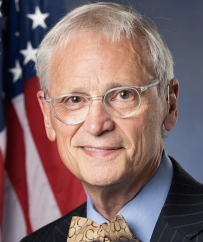
“...A combination of single-member districts, ranked-choice voting, and an expanded city council of 12 members…. certainly enhances representation, but … makes it extraordinarily vulnerable to paralysis, dissension, and delay.”
In the twenty-eight years serving in Congress, preceded by local government experience, you’ve successfully authored and rallied support for innumerable laws and initiatives that have addressed our environment, trade policy, food & agriculture, mobility, ect. You’re now back home in Portland, which to be sure has its fair share of challenges. What has changed civically, and what are it’s most pressing governance challenges?
Earl Blumenauer: Portland was hit hard by the combination of COVID and the social unrest which followed, and we’ve been a little slower to recover than other places.
We’re also trying to implement a new city charter that has been tried nowhere else in the world and that has been greeted with some real challenges. It’s hard to even explain, and I think it has slowed down the recovery. The new charter was written by people in control of the charter process who were very interested in maximizing representation and, candidly, paid very little attention to how you govern. The first year and a half has provided some real mixed results. Despite spending a lot of time and money studying a revision of the charter, nobody really explored the implications of an even number on the city council. It split six–six, with those aligned with the democratic socialists at variance with the other six. It has produced a real challenge to actually govern.
We’re still working through it. I have some degree of optimism, just because I think Portland’s got good bones, and there is a core of people dedicated to some of the reforms that characterized our city in the past. But the new form of city government has not helped, and frankly, the people aligned with the democratic socialists are less interested in performance. That’s been a real challenge for us.
You note that Portland’s recent City Charter Reforms have never been tried anywhere before. Elaborate?
Earl Blumenauer: One characteristic that stands out is that it is a combination of single-member districts, ranked-choice voting, and an expanded city council of 12 members. The combination of those forces enables somebody to get elected to the city council with 23 percent of the vote.
That certainly enhances representation, but it’s really hard to arrive at a consensus and get things done.
It was very interesting. There was a recent city council meeting where a revered civil rights icon – a leader in Oregon’s Black community and a veteran of city and state government – came with her voice strong at age 83. She said she didn’t elect people to sit around and not get stuff done. She proceeded to excoriate them for not being able to work out their differences and accomplish things. After reviewing the social media response to her impassioned call to action, it was clear every member of the city council agreed with her—because they thought she was talking about somebody else.
This is an area that deeply troubles me. There is less emphasis on actual performance, and instead a collective engagement with a variety of things that make it very hard to provide a consistent plan of action—one that can align what is possible and what appeals to the public with resources and reality. These are not unique to Portland, but the new form of government makes it extraordinarily vulnerable to paralysis, dissension, and delay.
As a retired member of Congress, you now lead an ‘Institute for Metropolitan Studies’ at Portland State. This obviously offers you an opportunity to engage personally with your former constituents — including the current City Council, the Mayor, other civic leaders. What are you hearing/learning from them? What assistance, if any, is being asked from you?
Earl Blumenauer: After over 50 years of continuous public service, everybody has an idea of what I should do. It’s interesting—people still listen. I get invited to things. I’m trying to work with our Institute of Portland Metropolitan Studies on some very specific things in this new climate.
Part of it is providing a safe space for people to come and work together to solve problems. That sounds like it shouldn’t be that difficult, but it is, because of the divisions. There are challenges between the city and the county, challenges with state government. It’s hard to describe the impact that federal dysfunction has on us all, because we’ve relied on the federal partnership for everything from transportation to recovery from COVID. It’s been a challenge trying to bring people together in a way that produces digestible progress.
We are working on the challenges of reaching consensus. For example,the Institute just completed a process to envision Portland’s waterfront. To shine a light on this process, I recently led a tour of Portland’s waterfront. We’ve had conversations in the past, David, about places where people have rediscovered even things that are only a river by definition, like the Los Angeles River. But waterfront really attracts people, and there are ways to reorient and rediscover economic activity and recreation in a positive sense. These are issues/metropolitan challenges that I am very interested in: trying to build consensus working with the city and the county, and trying to encourage constructive engagement politically.
The latter is critical to designing and implementing charter reforms. If one’s not careful in this era of rampant innovation and reform, we layer reforms upon one another: a new charter, and reforms for financing elections. We don’t have any experience with how ranked-choice voting in these districts, a radical change in the finance of elections, and the role of outside groups will play out – we’re still sorting it out. These are things I’m trying to spend some time thinking about, including ways we might suggest reforms.
Once you get a revised charter – in my experience, having done some of this at least in Oregon, and then looking at it in other parts of the country – once you throw a reform charter in front of people, they’re very likely to pass it. And once passed, the public is very unlikely to want to change it anytime soon. So there’s a delicate dance in doing things like that.
You echo, to be provocative, President’s Clinton & Biden reverence for political consensus. Do you actually believe “consensus, governing, and pragmatic results” is what today the electorate is yearning for from their public officials. Isn’t growing Hyper-Partisanship discouraging “reaching across the Red/Blue line”? For example, Hakeem Jeffries, the leader of House Democrats' recent meeting with Jerred Kushner—is being chastised by many in his own Party.
Earl Blumenauer: There’s a crisis in both political parties, I would say, at this point. Part of it is that there are people who are not deeply steeped in how you actually get something done. I had a chance to study Speaker Pelosi up close and personal for most of my 28 years in Congress—a woman who knew how to win elections, but who then knew how to get things done and have people be accountable.
I do think there is a formula in terms of selecting the issues that bring people together rather than divide them. I mentioned the waterfront project. It’s small ball, but it’s something that could be translated into something that will help accelerate Portland’s recovery in a way that’ll improve quality of life and strengthen those governing muscles.
I am very proud of work I’ve done, both before I was in Congress and in Congress, that was designed to take some of the edges off and, as they say, bring people together rather than divide them – and to use those strategically to try to get things done. Agricultural reform: everybody eats, and that’s something I think is going to help lead Portland’s comeback because of its culinary leadership. But it also brings together rural and urban Oregon. Projects like mass timber have the creative potential of maximizing underutilized resources, making it easier to build housing. These are common problems that we face.
We’ve identified the paralysis in some of the blue cities. Our friend Ezra Klein has noted that these well-intended blue governments are singularly incapable of building streetcars or high-speed rail – shouting their commitment to providing housing, but unable to actually overcome structural opposition.
CNN’s Fareed Zakaria recently asked: Why Blue cities, like NYC, aren’t held accountable for their enormous budget deficits. His commentary’s subtheme: Blue cities seem to address every policy challenge as requiring a new federal, state or local program- and more spending.. which Zakaria asserts hasn’t seemed in recent elections to move voters from Red to Blue. Question: Is collaborating with the Private Sector, incenting market innovation, awarding entrepreneurial success…no longer favored by Democratic electeds promising to address governance challenges?
Earl Blumenauer: Everything that I’m most proud of in the work we did for a half century, trying to make Portland one of America’s most livable cities, relied on those partnerships. We created the first modern streetcar, and we were engaged with private developers and city government, using our resources along with state and federal. We need to be able to take advantage of all those resources.
But in Portland and in California – blue states and blue cities – there are procedural challenges, because everybody needs to satisfy their interest groups. Every voice needs to be heard, and you need time to reach consensus on things without doing the foundation to have a consensus. People joke that Portland “was” the city that meets. It’s becoming extraordinarily difficult, because our land use planning is somewhat ossified, and because of the weaponization of political opposition and social media. I can’t describe how destructive I think the social media aspects are—they have made politics at all levels into a nightmare.
Seattle, another northwestern metropolis, while not challenged by charter reform, is challenged more by not being able to address the City’s crime and increasing social disintegration. To again be provocative: you’ve been a longtime proponent of legalizing drugs, but both in Portland and Seattle clearly unintended consequences have resulted.
Earl Blumenauer: Well, David, one of the things I am proud of is working to decriminalize certain substances. There’s a difference between decriminalization and legalization. I continue to think that one of the most destructive policies we had was the federal prohibition on the use of cannabis. It criminalized generations of young minorities, primarily Blacks, created a crisis in our prisons – in fact turned them into community colleges for crooks – and disrupted life unnecessarily.
We’ve seen it in my community and others, where people confuse decriminalization and not having heavy-handed enforcement with legalization and anything goes. I don’t think there should be open-air drug markets. There was no reason for that to happen in Oregon. People mischaracterized the policy and they misapplied it. And coupled with some of the backlash we’ve seen in the aftermath of George Floyd and in some of the areas of racial injustice, it created an attitude that made the policies of policing harder. People confuse, as I say, decriminalization with legalization.
That’s one of the reasons I wanted a system that was not reliant on extreme enforcement was to be able to be sure that we could help young people. One of the consequences of unrealistic drug policies is that people simply turn to the black market, they know their corner drug dealer – does not check for identification and there is no quality control on what they are selling. Enforcing a system to protect and utilize law enforcement reasonably and strategically is not at variance with most of the progressive visions for drug reform. Turning our backs on people with addictions doesn't help anybody, it's not humane. We now have worked so hard to decriminalize cannabis locally and federally—because we need to be able to deal with it in a rational fashion. The excesses of extreme enforcement, selective enforcement, and the criminalization that I talk about had all sorts of social dysfunction embedded in them, and they confuse the path going forward.
The response of critics of legalization, however -- perhaps confusing legalization with decriminalization- is that otherwise unlawful behavior in public presently can’t be prosecuted. Isn’t the latter, if true, a local policy challenge that requires a policy rethink?
Earl Blumenauer: I think there’s absolutely no reason that we can’t hold people accountable for their behavior. We don’t need to tolerate open-air drug markets, particularly in sensitive areas. And we’re not helping the people who are victimized by dealing more responsibly with issues of involuntary commitment. I find it appalling that some people, I think in good faith, think you can just sort of step back and watch people destroy themselves on the streets in front of our eyes. If somebody were having a heart attack, we would intervene. Having this drug crisis is no excuse for us not to be able to support reasonable responses, and there need to be tools to work against the excesses.
Part of why I care about having a reasonable drug policy is that people have lost sight of the realities of today’s drug crisis. Cannabis now - unlike 30 years ago- is being sold openly & is much different - much more potent. The American public, particularly young people, have little awareness of the consequences of drug use. One of the reasons I wanted a system not reliant on extreme enforcement was to be able to try to make sure that we could actually protect young people.
The way that we have things now, with unrealistic drug policies, is that people rely on the black market. People know your corner drug dealer doesn’t check for identification or quality. There’s no license to lose. I think having a system, enforcing the system, and protecting and utilizing law enforcement reasonably and strategically—that’s not at variance with most of the progressive visions that people have. And just turning our back on it, allowing extreme policy and neglect of people in need, doesn’t help anybody. I don’t think it’s humane.
I don’t want to go back to the days, where we were taking chronic late-stage alcoholics and putting them in jail and in drunk tanks. I was part of an effort to have a more humane response in the state of Oregon for drug and alcohol policies. I still think that if the policies themselves are not realistic, it just reinforces failure on the part of government policy, and a lack of respect and understanding with the public. These are complicated issues, but I think there are answers, and the answer is not extreme enforcement. It’s not ignoring the realities. It’s having the partnerships, both public and private, that are necessary to be able to deal with the challenges we face.
In LA, as in Portland—there are some who publicly wish/ask their elected officials “to defund the police”, or, through budget cuts to reprioritize Police Departments priorities. How has Portland responded to such proposals; and, how would you respond if you today were on a City Council?
Earl Blumenauer: Well, I think it was ill-advised. I think that’s one of the problems they faced in Seattle, for instance—is that there are areas where they just stopped enforcement altogether. City electeds were swept up with some justifiable concerns of selective enforcement and unequal application of the law. But the answer is not to discourage law enforcement from doing its job. Police have some of the most difficult jobs in America. And I’ve personally experienced how hard it is to recruit and train people and get them on the ground. You end up destabilizing the force. And once you lose momentum in having a well-trained and respected law enforcement enterprise, it’s really hard to get it right.
Another partisan governing / result has been called out by one of California’s most senior & respected journalists, Dan Walters. He writes: “Sacramento school district’s financial crisis exemplifies politicization of public education…. The hyper-politicization of California’s public schools over the last half century matches up almost exactly with the decline in educational achievement of its students.” Is such politicization of local government peculiar to California?
Earl Blumenauer: No. Unfortunately it’s a general problem. In Oregon, the Democrats have been in charge of state government, more or less, for 40 years. We have put significant sums of money into programs like housing and education, and the results are troubling. The results on national tests put Oregon below states like Mississippi. We have a housing crisis despite having invested billions of dollars. The taxpayers have been very generous. But there’s been an inability to deliver affordable housing where it needs to be. It’s not as bad as it’s been in some places, but it’s a serious problem.
Indeed, I am deeply troubled today with celebrated leaders & political movements who prioritize having power while not being "accountable for results”. It’s just not enough to teach people how to win elections; it’s important to teach them how to govern. We’ve seen so many examples in Oregon and Washington where the issue is not a lack of resources. It’s an inability of the government to marshal those resources and deliver results.
I had a forum in Portland a couple of years ago with 45 people who had their hands on all of the behavioral health issues—prosecutors, mental health programs, health care, mayors, the governor, a broad range of elected officials. It was fascinating, the discussion that was led by Norm Ornstein, a person you know well, who, after the tragic loss of his son to mental illness, has devoted himself to some of the things that he’s seen working—for example, in Florida, where he’s been on the road with a judge who’s a proponent of approaches for making these things work.
The consensus at the end of the day, with all of these people, was that the problem in Oregon with our behavioral health crisis was not a lack of money. It was not being able to utilize the resources we had strategically to produce those positive results. That’s an ongoing challenge. I don’t think some of the waves of government reform – or the backlash to perceived problems—is helping us. It is being able to deliver results, not just to mobilize more resources.
Our Newsletters recently published a “Missing-Middle” Housing” interview of California’s former Assembly Speaker and Senate Majority Leader Bob Hertzberg in which he elaborated on the State Revenue Bond #36 on the ballot in November that he has authored. To quote Hertzberg; “I could not get a missing-middle fix done in the California Legislature, because quite frankly, the political industrial complex surrounding the affordability world would have pressed that the bond offers no assurance it gets paid back. (Candidly) You cannot do a straight middle-class housing play through the legislative process. So, I have been working pro bono from the outside to get this done.” What Earl, does that say about government accountability?
Earl Blumenauer: Well, the forces that are heavily invested in the typical responses we’ve had for affordable housing, plus the reform elements, and environment, and the impact from neighborhoods, all combine to create a system where actually getting the product done has become tedious, time-consuming, and expensive.
And I can identify with what Bob’s saying. We see it in our community. People joke about the housing industrial complex that is dominated by some of the competing elements in various governments, and with the nonprofit sector, for example, the requirements for childcare, and higher wages for the people who do the work. The cumulative effect of that is costs that far exceed conventional housing construction. But people are, in fact, entrenched. They’ve got their protected position in the discussion, and the discussion tends to be rather limited to people who have a stake in that part of the process, rather than in the overall outcome.
From your time in local government to 28 years of service in Congress, you have been uncommonly committed to citizen engagement; Indeed, 1000 Friends of Oregon and other like-organizations emanated from Oregon, and were models for the country. What is the status of citizen engagement today? What’s working and what isn’t working now, regarding how to best engage citizens in their governing institutions?
Earl Blumenauer: Well, I mentioned the challenges of social media, where so many people now get their information. I’m at arm’s length from much of the social media scene.
Part of the challenge we have is the notion of having independent, thoughtful journalism that was looking over our shoulder and challenging us to expand our horizons and be accountable for results. Oregon started some of these important reforms with the participation of former Governor Tom McCall. He was a television journalist, who exposed some of these things to the broader public and helped build consensus and momentum.
One of the things that deeply troubles me is our failure at civics education. My wife and I have been spending a lot of time in Oregon trying to promote civic literacy amongst young people. And we’ve had some fabulous successes in Oregon—the national constitution competition that takes place every year. Oregon routinely places winners who, if they don’t win it outright, are in the top five. But there’s very little concerted effort for civics education. It is hard to practice what you don’t know.
And so: social media, lack of civics education, and the rise of organized interest groups in terms of campaign finance, have all had a distorting effect. I won’t go into the impact that dark money has had on the federal elections, but it has been extraordinarily corrosive. But increasingly in local government, the combination of social media, organized special groups, and what is touted as campaign reform has really scrambled the operations. There’s also the ability of special interests to weaponize some of Oregon’s and California’s gifts to democracy – the referendum, the recall, and the initiative. My goodness, it’s just been – in both our states, it has resulted in things that are designed to pass, but not designed to work.
Oregon, not too long ago, had what many considered a great newspaper, The Oregonian. Is it fair to assume that it, like many other metropolitan newspapers today, including in California, are a shell-of-their-old selves. Many community leaders, as a consequence, are unaware of who represents them in their State Capitol, and only a few know their own local government officials. Address how significant such growing civic ignorance is for efforts to reform governance?
Earl Blumenauer: Well, as I said, the reason I care about civics education is that you can’t defend, and you can’t use, what you don’t understand and what you don’t know. It is absolutely maddening that people can’t differentiate the various roles and layers of government, tie the pieces together. That confusion compounded the role that social media plays in disseminating information, so that people can’t differentiate fact from fiction.
I mean, I have confessed that a lot of the stuff that we used to do would not be possible in today’s environment—without responsible journalism to be able to mobilize people in support of these objectives and policies. I don’t pretend that it’s easy. And so we’re working on things like civics education, with out institute, trying to create a safe space where people can come together to explore topics that are hard and controversial, and do so in a way where they feel comfortable engaging and not creating a sound bite that’s going to come back and haunt them.
Are “influentials” today perhaps too focussed on Policy, and too little focussed on Governance – on how representative government makes law, allocates resources? Are those engaging for the first time in politics truly ready to accept compromise as a means to achieving incremental change?
Earl Blumenauer: I think that is a fundamental challenge we face. But, again, we should not empower people to pass policies and not be held accountable for the results. It’s at a time when all of this becomes much more complicated. When we layer on reforms of open meetings and campaign reform, and public participation at the grassroots level, so that every voice is heard and they have time to be involved. That often conflicts with the reality of what it takes to actually build the affordable housing or get the transportation project done. It’s a pretty profound disconnect.
Polling, as has been extensively reported, suggests that voters don’t trust their government today - don’t trust either party, Democrat or Republican. How might trust be regained?
Earl Blumenauer: I think that observation is accurate. It is really hard to have these conversations, and people are suspicious. It’s not just Donald Trump. People have seen the failure of passing money for mental health, and it doesn’t seem to make an impact. Money for affordable housing. Building the high-speed rail—the train to nowhere throughout our lifetimes. And this has been something we talk about throughout our lifetimes; there’s been deep suspicion of government behavior. So it’s not something that I think is limited, or something that’s going to change quickly.
That’s why I try to focus on a few basic principles. One is to design issues that bring people together rather than divide them. Look for proven technology—I mean, like the streetcar. This is something that works. It’s cost effective. Actually, people like them. But there’s very little in terms of the architecture of transportation policy and funding that helps us do this sort of thing. It’s dominated by—and I hate to use the term special interests—people who really have a dog in the fight, as opposed to people who have concerns about results.
We make things so complicated. And as I mentioned, there’s the gift that Oregon and California have given to national politics in terms of the initiative, referendum, and recall—not just the use, but the abuse of those tools, at the behest of well-organized and well-financed special interests have a way of creating and promoting things that are designed for the people who fund them rather than the people who need to benefit of the results.
Frankly, I do believe at core that the things that unite us are stronger than the areas of division. I think being able to select our appropriate targets, and then help people navigate them, will pay dividends. I mean, that’s why I’ve delayed retirement: to try and spend as much time as I can working with young candidates, as much time as I can trying to focus on things in my community to make a difference, and then staying in touch with my colleagues to support them. This is what needs to happen, and at core, most people, if they stop and think about it, will agree with this.
Lastly, have you found that many community leaders that once were deeply engaged in politics now frequently assert that ‘good’ people just don’t want to run for office anymore. “It’s too complicated, it’s too damaging to them personally; that they often assert that there are good alternatives to public service.” Earl, is holding elective office as desirable as it used to be, 50 years ago?
Earl Blumenauer: It’s profoundly different. Part of it has been the Trump MAGA movement. I just recently returned from Maine, where I have been in part because of family ties and in part because I feel a kinship between Oregon politics and Maine politics. A former colleague there, Jared Golden, who is kind of one of the Blue Dog Democrats, was well suited to his district and probably would have been reelected, chose not to run again—in part because of the threats to his family. Many of my colleagues cannot go to public meetings without security. I’ve had my share of death threats, and having the county sheriff’s deputies start my car in the morning and stuff. But nothing like the current climate.
It is profoundly different. It’s nasty. I keep coming back to the impact of social media. People swallow this stuff, if they see it online, it takes on a reality and a cumulative effect that builds, some of the people in the highest levels of government are purveying things that had been unimaginable a few years ago. I mean, we had Charles Lindbergh at Madison Square Garden in the run-up to World War II. And Huey Long. There have been purveyors of this before.
But we have a chance now where everybody can be a social influencer. They can have a sweep that brings them in contact not with thousands, but with millions of people. And these things reinforce each other. Donald Trump has so cheapened and debased the political process and the rhetoric, pushing the boundaries of—I don’t even know how to describe the boundaries he pushes. And so that’s infected the process.
I made a decision, after over 50 years of being involved in the political process at all levels, that I could have much more impact and satisfaction coming back and working locally than in another two years of congressional chaos.
All of these things we’re talking about need to have a deliberate reset. We need to find a way to make people comfortable with the roles that they play. We need to be able to produce results, and there are lots of results, I think, that can be delivered on. You know, I work on bipartisanship and try to build those initiatives. I mentioned food. These are policies that you can explain to people, and there’s tremendous potential to get more value out of the political process.
Unfortunately there’s very little patience these days to lay that foundation. Sadly there are fewer and fewer people who think that this is their career path—or they think the career path politically is about cliques. The current path is ingratiating themselves to people who will invest financially in a political brand, not so much in political results.
I think it was the right decision for me to leave. I loved what I did for 40 years in elective office at all levels. But for me, I want to come back and deal at the local level with things that we can explain to people, that we can get our arms around, and be able to deal in areas of results rather than arcane policy battles—which is one of the reasons why I’ve been concerned watching what’s happened in a number of local governments, not just in Portland or Oregon, but around the country, that make it harder to deliver on that promise.
- Log in to post comments