


In conversation with TPR, Ron Blatman, the San Francisco producer behind the PBS series Saving the Bay and now Saving the City, a four-part documentary on urban civic problem-solving headed to public television and streaming, argues that the durable municipal wins of the last quarter century have come from parks, trails, and reclaimed waterfronts
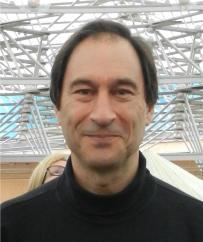
“We'll tell negative stories to show what works and what doesn't, but at the end of the day we want people to come away with a good taste in their mouth about how often it's individuals or small groups partnering with philanthropy, government, and the private sector to get things done.”
Ron, you've professionally been engaged for some time with a documentary series titled "Saving the City”. Describe the film series’ theme, content and your motivation.
Saving the City is a film series about how to make cities better places. The idea was to use storytelling to get people more involved in their communities — and then, once they decide they want to be involved, to give them examples of what people and organizations elsewhere have done, so they have a set of best practices to work from. It's not enough to say, "I want to get involved." It's also how you get involved, at least coming at things with some level of information.
How can people tune in and watch the series going forward?
Our website savingthecity.org has a lot of video stories on it — not necessarily the ones in the actual programs, but polished enough to give people an idea of what we're doing. We're about to relaunch an updated site. We're on all the social platforms; There will be a curriculum as well. We did one for my Saving the Bay PBS series, and it's still taught in schools and colleges today. We also send out a biweekly newsletter updating our progress — our most recent is here.
For anybody thinking about how this works: it's a nonprofit film. It makes no money, and I knew that going in. So if you're going to do it, the idea is to have an impact, not to do it for the fun of it. And having an impact means the film is a vehicle for a much larger goal — it’s a public education, or civic education, project. People can donate at savingthecity.org or by check — all funds go through the International Documentary Association in LA, the 501(c)(3) that has the paperwork, boards, and financial statements large foundations require.
What Ron motivated you to professionally take on the challenges of producing ‘Saving the City’?
I'm a native San Franciscan who has been involved in city or civic affairs since I was a kid, and was incredibly frustrated at things that I've seen take place in San Francisco. I like to tell people that when we screw up in San Francisco, we don't mess around in the millions — we piss away billions, and that’s in more than one case.
A lot of that waste, I would describe as a trifecta of failure:
For probably 40 years, the media has been completely absent from really covering things, city government is notoriously inept and the business community has traditionally been very hands-off about rolling up its sleeves on the city's future. Issuing white papers, yes; occasionally writing checks, yes, but not engaging in the hard work until recently — and that was kicked into gear by the need to respond to the pandemic and is now in overdrive thanks to the new city administration.
In response to that trifecta of failure, I basically decided I didn't want to run for office or spend my entire career in government, although that earlier experience was valuable. I thought that the other way one could have an impact was by doing something in media, because if you get lucky, you can reach a lot of people. And of course, the medium of choice is film or video, because that's the way you reach the most amount of people.
How are you framing / documenting the Cities featured in your series?
Over the years, as part of various real estate positions, I was lucky enough to be flown around the country looking at cities and markets. And on my own, I've repeatedly gone to study cities and even dragged my kids to pretty much every city of size in the U.S. and Canada. As a consequence, I thought that it would be a really good thing not to organize the series by city because that's kind of the expected way: What did Baltimore do? What did Chicago do? What did Dallas do? Instead, the series is organized by subject, which allows the viewers to explore how different cities approach the same issue, so that lessons can be learned.
Here in San Francisco, for example, we think the world stops at the Bay, that nobody else can teach us anything. This is not an advertisement to move to Omaha, but rather that somebody, somewhere else, often has a bright idea, puts it into action, and it works. The viewer can pick and choose. The Series offers an idea exchange – something you'd know a bit about.
Share with our readers, what are cities doing right?
I'd argue the biggest thing they're doing right is parks and open space and trails. I was just filming in Detroit and came back to Chicago through Toledo – it's what I do for fun. The Maumee River in Toledo has a fantastic new riverfront park on both sides, fantastic in every respect: the design, the way it's used, the number of uses.
That's one example of what you see all over the country: cities opening up waterfronts and riverfronts, turning previously underused spaces into parks, and of course trails are a hot ticket in cities everywhere. I have a story open on my computer right now that I ran into this morning about a proposal for a trail system in Buffalo and things of that sort.
LA is a city that is under parked, and where there are parks, I’d argue they’re mostly not great. But look at what happens when cities open these parks: they become incredibly popular, the properties around them increase in value, and the desirability of the city rises, and it's really a big deal. Detroit opened the Ralph C. Wilson Jr. Centennial Park on the riverfront not long ago, with money from the Ralph C. Wilson Foundation. It isn't adjacent to anywhere Detroiters would ordinarily go – it's south of downtown, along the river, industrial, and a giant postal facility runs opposite it for two blocks or more, blocking visual access. You literally have to make a special trip. And it's incredibly heavily used; people in Detroit told me it has become extraordinarily popular.
Which of your documented stories is the most replicable story of success?
Well, there are a number of stories that we did. We try and err, if you will, on the positive side. We'll tell negative stories to show what works and what doesn't, but at the end of the day we want people to come away with a good taste in their mouth about how often it's individuals or small groups partnering with philanthropy, government, and the private sector to get things done.
Take our story on urban trails. It is hard to find a park that's a failure anywhere around North America – some are better than others, but most are quite good, often in places people wouldn't expect.
For example, a well-known trail story is the High Line in New York, which draws over seven million people a year when they anticipated 300,000. The spark came from two men who didn't know each other and turned up at a West Chelsea neighborhood board meeting about its future. That meeting was run, coincidentally, by a woman consulting for CSX whom I later interviewed in Atlanta, because she worked on both High Line and Atlanta Beltline. The New York Times tagged the two men "neighborhood nobodies." They got talking afterward — we shouldn't tear this down, what can we do? maybe we ought to start an organization — and $500 million later, the High Line came into being, because Robert Hammond and Joshua David met by chance.
Then we went down to Atlanta and we did a story on what's called the Atlanta Beltline, about 70 percent complete as I'm speaking to you. It is a loop trail that runs 22 miles around central Atlanta. It's basically four freight rail corridors that connect to form a kind of circle or diamond around the center of the city that were abandoned, and it took a graduate thesis to spark the interest in that. Ryan Gravel, a local kid from the suburbs getting his master’s at Georgia Tech, proposed connecting those rights-of-way with a light rail and pedestrian pathway system looping through 45 Atlanta neighborhoods. He sent it to Cathy Woolard, head of the city council, and she bit. Even though the business community was against it, and there wasn't much traction at the beginning, the Beltline today – with no transit, as a walking, jogging, biking, and hiking trail through those 45 neighborhoods – is the biggest thing to happen to Atlanta since Sherman marched through during the Civil War or at least since the airport was built. The $700 million expended on the Beltline has kicked off $14 billion of investment since, and there are billions more in the pipeline.
You can't look at an article about Atlanta these days without something referencing the Beltline. And where does it come from? One guy who drew up an idea in grad school.These are stories that are inspirational. They're stories of success, and they're stories that really say that at a time when the federal and state governments are mostly dysfunctional, people are still getting things done at the local level.
In a few of your documented stories, it appears that a Mayor’s successor actually achieved project success. How challenging is that feat? And how often does it happen?
I don't want to say that’s somewhat rare, but it's somewhat unusual.
I've run into it in cities all over where we've done stories, and it doesn't matter what the subject is – housing, parks, families in cities. City after city tells us: this mayor was a champion, but then we got another mayor with a different set of priorities. It's a huge challenge, because people come into office thinking they have to completely reinvent the wheel, when many times they don't need to.
The State of California – as you well know– has been stripping local government and planning commissions - ostensibly to incent more affordable housing - of much of their stewardship over the built environment. Does overriding local control cut against the lessons in your documentaries?
I would argue it somewhat does. We have an issue here in San Francisco, I'm involved tangentially, over a building nobody would dream of conceiving of, let alone allowing, that is moving forward because of a loophole in the sequencing of when different laws took effect. There was a window of literally a few days, and a very aggressive development firm slipped in. It's looking to frankly destroy everything San Francisco has historically been about.
What concerns me — and I predicted it when this was proposed a year ago, and I'll predict it again, because I know the people behind it — is that there is going to be a vicious backlash to taking things away from local government. All of us who want to see stuff built are going to watch the pendulum swing crazy the other way: all kinds of restrictions on building, at exactly the time we need to build, because there was overreach on the other side.
And it isn't only the loss of local control. Some of what's allowed makes you scratch your head. Attorney General Rob Bonta just went after Menlo Park over a project the city is fighting. Menlo Park is a suburban city next to Palo Alto. It's got plenty of offices. It's got plenty of commercial space, but it's all basically no more than four stories. So Menlo Park has a couple of large sites that have been sold recently to developers. One proposal from a San Francisco firm makes a lot of sense. The other — and I'm less familiar with that site — is a very large parcel surrounded by single-family homes and low-slung buildings. My taste, from a real estate, urban design, let's-get-dense standpoint, would be to ring a site like that with two- to four-story buildings and get to six and eight stories in the middle. It would be greatly densified and greatly changed, more than anything Menlo Park has ever seen. Instead, under these state rules, they're proposing a 39-story tower. Not on the Caltrain line. Not downtown. Not on El Camino Real.
You scratch your head and you go well, not everybody's a NIMBY. There's another word for people who don't like things like that, and I would argue that the word for people who don't like these things is not NIMBY. The word is smart. There's such a thing as smart growth instead of just doing things because one can due to narrow windows of opportunity.
Ron, nationally, conventional wisdom today paints the country’s politics as either red or blue- with cities as mostly blue. Are there red cities that offer replicable successes?
Well, there are cities that run in the red. But yes: one traditionally red city, probably sliding into purple these days, has done a phenomenal job of transforming itself — Oklahoma City, in a very deep red state, which is Oklahoma. They've had a series of very good mayors going back to the early '90s, which is one of the reasons things are getting done, and they're all Republicans. If you look at their platforms, you may not believe they're all Republicans, but in terms of how they self identify, they're all Republicans. Not only that, the citizens of Oklahoma City have voted four times to tax themselves for civic improvement projects, then a fifth time recently for a new arena for the Thunder. And there is a ballot measure being prepared for 2027 that will be for transportation — a limited time sales tax measure to improve transit throughout the Oklahoma City area.
How is it that Republicans not only advocate for taxes, they vote for them? And the reason that they do it is because the city, in all of the times they've had these programs, delivers. They say things will get done in a certain period of time. They'll get done at a certain cost, and they'll deliver measurable outcomes. And what do you know? They do it almost every time. Sure, it slips a little here and slides a little there, but they deliver almost every time. So when you go back to the voters for the next one, they support it.
There's a very interesting backstory. The program is called MAPS (Metropolitan Area Projects), where they put a penny on the dollar sales tax for a limited number of years, and then have a specified number of capital projects that that will fund. There's no debt; they pay cash, and they don't spend the money until they've raised it. I know it's a novel idea, but it's worked really well in Oklahoma City.
Before concluding, what's the biggest challenge facing cities who undertake to do something “consequential” – especially in the absence of support from Washington?
I would say that in every city that I go to, and it doesn't matter what the size, what the market, or what the state of the economy, the civic leadership from mayors on down all say the biggest issue is housing, and in particular affordable housing. This goes back a few years before now, where the word “affordable” became every fourth word in any political discussion. This goes back five, six, seven years. Affordable housing means housing people can afford. In California, "affordable housing" means subsidized housing. What they mean, in a lot of cases, is housing that regular working people can just afford in their own communities. That's the single biggest issue they face.
Lastly, How many “Saving the City” documentaries are being produced? And, could you identify your funders?
I had this idea a long time ago. We started shooting at the end of 2017, through 2018 and into 2019. I had a lot of things on the docket for fundraising set up, including dates and events for 2020, but we all know what happened in 2020. COVID put a stop to what we were doing for about two and a half years. I didn't want to fundraise when people were in food lines, let alone being sick, and we didn't go out and film anything.
So I retooled, and then starting in 2023, 2024, and 2025 I was in a different city basically every month, filming because I decided let's get four shows done instead of two. So we are just about finished with our first four one-hour programs. Unless something dramatically changes, they will be released on public media on PBS stations around the country in mid 2027, and they will also be at the same time released on multiple streaming services. We have our first four. If I can raise the money, I'd like to get work started on our next six.
My biggest funder is the William Penn Foundation in Philadelphia. I've got a number of foundations, a number of individuals, and a handful of companies. I'm an equal-opportunity beggar – as long as it's legal, I'm happy to take the funding.
What do you think is enticing the William Penn Foundation and the like to invest in this series?
William Penn is very heavily involved in Philadelphia, and what I found interesting is that they were interested precisely because we weren't only going to film in Philadelphia, which we did, but elsewhere as well, so we could do the comparisons, so that 's the lesson learned part. That's different from other urban-related film projects I've seen, which tend to talk about a place. We go to two places, go in depth on their stories, and then, because we've filmed in so many places, we often bring in others as well.
Just as a quick example, we did a story on transforming public housing projects that were really notoriously bad. We filmed in Atlanta, the guinea pig for what became HOPE VI and Choice Neighborhoods at HUD, and in Toronto, which probably set the global standard for how you do this. Not only do we do those stories in some depth, but while we were in Seattle filming something different, we sidebarred to Yesler Terrace, a mixed-income community that arose out of a dilapidated World War II–era public housing project. And when I interviewed a man who had been a vice mayor and a councilman in Chicago, it turned out he grew up in the notorious Cabrini-Green project, so we filmed on site and had him talk about growing up there.
So we try to bring a national lens onto what are sometimes local issues. Cities develop in patterns; they follow whatever is in vogue. One city builds a domed stadium, and pretty soon six do. When James Rouse was around, one city did a festival marketplace on the water and it worked, and then all kinds of cities did festival marketplaces, whether they should have or not. So we have this 30,000-foot vantage point: we watch what's going on everywhere, look for patterns, and try to tell those stories accordingly.
- Log in to post comments