


Pasadena City Councilmember Rick Cole once was described appropriately by the LA Times as “one of Southern California’s most visionary planning thinkers.” A City Planning Commissioner before successfully returning to the City Council after a 29 year hiatus during which he worked on award-winning General Plans for Azusa and Ventura as City Manager in those cities. He also spearheaded the adoption of the most recent Downtown Plan for Santa Monica in 2017. TPR spoke to him about the state of planning in Pasadena, with emphasis on the reclaiming of the 710 Stub from Caltrans and the implementation of the City’s efforts to extend the success of Old Pasadena and South Lake to neglected areas of the city.
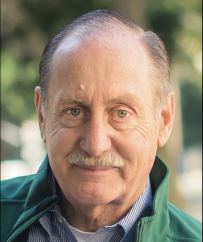
Will Rogers advised buying Southern California real estate “because God isn’t making any more of it.” The 710 Stub is 50 acres between Old Pasadena and some of your community’s most beautiful historic neighborhoods. How is the planning going for reconnecting the City by reclaiming that land from the abortive freeway extension that now runs through it?
The good news is that we’ve wrapped up the first phase of planning, emerging with a consensus “vision” unanimously adopted by the City Council after a two-year effort led by a citizen task force and a team of staff and consultants. We are anxious to move forward on two tracks: translating the broad vision into a Specific Plan and setting up the public structure to actually oversee the development. I’m anxious to see both proceed concurrently. I don’t want to develop a plan with the community and then hand it off to a new entity that hasn’t been informed by that planning effort. Those implementing the plan need to participate in the planning to carry out the spirit of our vision.
What are the broad outlines of the vision?
At the heart is at least 1800 units of new housing for all income levels, but with a substantial share of affordable rental and ownership opportunities. We also aim to transform what is a bleak asphalt-dominated ditch into a series of walkable neighborhoods, with more commercial development near Colorado Boulevard, stepping down to lower-density housing near the southern end at California Boulevard. The vision also includes a rich mix of public amenities, including an active gathering space to extend the vitality of Old Pasadena.
Key to this consensus is a commitment to restorative justice. Thousands of residents were uprooted by Caltrans to make way for the 210 and 134/710 interchange. That legacy is one we want to address through local hiring and contracting goals, through opportunities for descendants to access the new housing and business opportunities and to memorably mark the history in healing ways.
What about the traffic?
That remains contentious. Understandably, some residents of nearby neighborhoods worry that the traffic that now flows through the Stub may be diverted to their streets. The metaphor they use is that “traffic is like water.” They believe if the Stub is reclaimed, they will suffer the burden. Of course, if traffic is like water, water also evaporates – and reversing the deliberate diversion of freeway-scale traffic through residential neighborhoods is critical to promoting better approaches to mobility.
The signage on the 710 still says the northern destination is Pasadena, even though it ends in Alhambra. While Caltran’s goal of pushing the freeway all the way to Pasadena is as dead as Jacob Marley, even if its ghost continues to haunt us. We need to divert the regional commuter traffic away from the residential neighborhoods of Pasadena, South Pasadena and El Sereno in LA.
How is the city approaching actual development of the 710 Stub once plans are complete?
We got a sound advise from the LA district council of the Urban Land Institute. They brought in experts to recommend that we set up a special entity with expertise and capacity to lead the public development of the Stub instead of outsourcing that to a private developer. Of course, it will be private sector developers who will actually build the housing and commercial buildings. Our commitment, however, is to retain public ownership of the land and enter into 99-year ground leases.
We already have models that are congruent with what experts are advising. Both our Rose Bowl as well as our convention center and civic auditorium are managed by non-profit arms of the city. These specialized functions thrive under management that is focused on the business they are in. Obviously real estate development is not a core competency of local governments, so it makes sense to set up a special-purpose entity to finance and construct the needed infrastructure and then to guide the private development to meet public goals.
I have been perhaps the most impatient of the Councilmembers to structure this new body. I worry about getting too far down the planning road without standing up the entity responsible for implementing those plans. Far too much time and money across California is wasted on developing plans that are never effectively implemented.
That’s a long-standing critique of your impatience that has caused tension with professional planners. Elaborate on your views on City Planning.
I used to joke as a City Manager that I am not a professional planner, but I’ve played one on television. While I strongly support investing in planning, it’s also true that I’ve been sharply critical of viewing the word “plan” as a noun instead of a verb. What do I mean by that? Too often planners see the goal is to finish a “plan.” The real goal is to actively “plan” to produce results. I would tell planners your job is not to make great plans, it’s to make great places.
Old Pasadena is a case study for successful implementation of a plan through the public investment that sparked revitalization.
Exactly! The original plan to save that historic district from demolition -- and adaptively reuse the existing architecture -- was both simple and practical. What made the difference (Thank you Claire Bogaard) was committing the staff effort and public financial investment as a catalyst for private investment. Professor Don Shoup told the story of one vital element: shifting from requiring every business to provide its own parking to investing in shared public parking structures. The City invested what today would be almost $100 million to build three large parking structures with ground-floor retail. We paid for them with revenue from parking meters on the surrounding streets.
I used to say my three greatest achievements as Mayor of Pasadena were, first, enacting our landmark General Plan that has shaped development for the last three decades; third, putting parking meters in Old Pasadena; and second, not getting recalled for putting parking in Old Pasadena.
As Shoup noted, using the parking meter revenue to both pay for the parking structures and invest in security, maintenance and beautification of Old Pasadena was the catalyst for the ongoing success of that district. That’s a lesson most cities seem to miss: you have to put your money where your plans are to achieve the glowing promises that they outline. And then private investment brings a return on that investment.
Yet today most cities are cash-strapped and reluctant to take on debt.
In the public sector we obsess about costs, but seldom make decisions based on the return on investment.
For example, over the past nine years, the City of Pasadena has spent over $4.5 million on a single consultant responsible for helping our staff develop eight specific plans across the city. Yet we’ve failed to allocate a dime to actually implement those plans. That’s lunacy to me, especially at a time when our budget is feeling the same strains that severely impacted our state and other local agencies. We know from Old Pasadena and South Lake that placemaking works, so we need to extend that success to the neglected parts of Pasadena to encourage existing businesses to grow and new businesses to open.
Of course, investment has to take into account risks. If I were the City of Los Angeles, I wouldn’t take on $2 billion in bond debt to expand a convention center when, in my opinion, there is no way to predict the future of big conventions over the three decades it will take to pay the money back.
What kind of investments are more prudent in your view?
Modest placemaking that creates walkable, memorable districts!
When a major investment firm left Downtown LA to move to South Lake in Pasadena, they cited the pedestrian amenities, street life and proximity to a wide range of compatible uses that appeal to today’s workforce. Too many cities are looking to lure specific industries or firms instead of creating the environments that have broad appeal as places to work and locate your business.
So while we haven’t yet invested cash, the City Council did authorize creation of an EIFD (Enhanced Infrastructure Financing District) for not only the 710 Stub, but also the Lake, Lincoln and North Fair Oaks commercial corridors. The latter neighborhood-serving business districts aren’t planned as regional destinations, but as places the surrounding neighbors can access by walking, biking and public transit. That puts less traffic congestion and keeps dollars circulating locally. Through an EIFD, we can bond against future property tax growth to pay for the placemaking investments that will spur that growth.
When I was in high school, I attended a school board meeting during the tumultuous days of integrating our schools. I happened to stay late one night when the four men who considered themselves fiscal conservatives nearly turned down a Federal grant to convert some asphalt playgrounds into grass playfields. They were worried about the upkeep for greenery. The lone female, her name was LuVerne LaMotte, told them, “I think beauty is worth a certain amount of investment.” That persuaded them up and I think her wisdom is still true today.
- Log in to post comments