

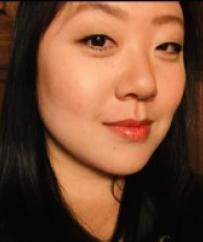
In conversation, Esther Kim, an architectural designer with nearly two decades of experience across residential and commercial projects, shares why she founded Altadena Village Partners, an emerging grassroots effort focused on rebuilding Altadena’s commercial corridors after the fire. She reflects on the group’s origins (mostly architects and planners), their self-funded recovery initiative, and the shift from traditional top-down visioning toward an owner-centered recovery model. Drawing on both her professional background and on-the-ground engagement, she shares how recovery is unfolding through small groups of owners navigating trauma and uncertainty amid external capital pressures and limited resources. Kim’s work offers a model rooted in social capital and local agency—one that seeks to preserve community identity while embracing organic, incremental growth.
“...It became clear that in a post-disaster context, the only real entry point for broader planning conversations was through stakeholders with agency...those who both needed to act and had the ability to do so.” - Esther Kim
Esther, let’s begin with introducing yourself and the origins of Altadena Village Partners, and the challenges you set out to address.
Altadena Village Partners started as an ad hoc group of professionals who met at a rebuild event in February 2025. There was a huddle, one for the Palisades and one for Altadena, and the question posed was whether there was a space for rebuilding back better in the public and commercial areas.
There were two breakout sessions, and the group that met for Altadena basically just kept meeting after the event. So the originators of that group are sort of the founding members, and it was mostly architects and planners. For a little bit of background, I’m trained as an architect. I have a master’s degree in architecture, and I’ve practiced across different scopes and scales for almost 20 years.
Altadena’s Village concept, which goes back to the 1986 Community Plan, seems central to your work today. Elaborate on how you’re building upon or being inspired by that.
I think a recovery process is very challenging to face, but one helpful tool has been the 1986 plan. This is a plan that went through many rounds of consensus building with the community back in 1986. It’s also based on an older 1969 plan, and there are some principles that were just held over time. Nobody wanted to have to go through a process of rethinking the commercial areas after the fire, but given that there were a couple of documents established before the fires, they sort of became resource guides for how the community was already feeling and thinking.
We can look back to them as grounded expressions of community attitudes and values; what people wanted for their town, and that’s why it was important to start there.
Esther, how did this group come together, and what’s keeping the momentum?
The genesis came out of an initial meeting in February of 2025 held at the American Institute of Architects with about 150 attendees.
Then, that group just kept meeting, through weekly Zoom calls, and by the summer, we were tabling locally in Altadena and meeting commercial property owners little by little. Most of us are architects and planners, generally coming from a New Urbanist framework around placemaking and more organic, community-based approaches. But early on, none of us felt fully comfortable engaging. It was difficult. People were traumatized, focused on their own losses, which is completely understandable.
There had also been a public charrette at Pasadena’s Blinn House with Moule Polyzoides in April 2025, and while there was some openness to discussing placemaking, there was also a strong sense that it was too early. It felt like any engagement process would be constrained by a community still displaced, still in trauma, still just trying to stabilize.
What’s unique about working with commercial stakeholders, as opposed to homeowners and the broader community, and how do the challenges differ?
In my own practice, I focus on residential architecture, but even under normal conditions, it’s expensive and complex to deal with design-decision making or negotiating insurance claims. When this opportunity came up, working alongside other architects and planners focused on recovery at a larger scale, I transitioned from individual home design to thinking about the bigger picture: placemaking and the future of the town.
As we continued engaging, it became clear that in a post-disaster context, the only real entry point for broader planning conversations was through stakeholders with agency, those who both needed to act and had the ability to do so. That led us to focus on commercial property owners, where there was both urgency and capacity to engage on larger urban design questions.
Given the broader issues or constraints surrounding insurability, permitting approvals, and maintaining affordability amid reports of speculation, might you situate AVP’s perspective on the longer-term scope of this work?
There are a few layers to that.
On the private side, there are definitely developers reaching out directly to commercial property owners: whether to purchase lots, propose joint ventures, or explore different types of deals. That’s something we’re seeing pretty consistently, based on both direct observation and feedback from the roughly 80 owners we’re in contact with.
At the same time, there have been structural constraints from the beginning. Commercial property owners were not included in FEMA debris removal in the same way residential properties were, so their cleanup was delayed, sometimes close to a year. There were efforts to push for inclusion, even at the federal level, but ultimately, they weren’t allowed to be part of the Army Corps’ Scope. Some owners ended up handling cleanup privately, and others were later folded into the residential process, but that initial delay had already set things back.
On insurance, it’s similar to residential. There are long delays in when funds are actually dispersed. The last estimate I heard was about a year and a half, and that may extend closer to two years depending on timing. I’d note that many owners are also tied to SBA loans, so they’re working within those disbursement timelines. I believe there was a recent executive order by Trump, but it still creates a set of overlapping constraints.
Right now, most commercial property owners are still in early stages, trying to figure out what they want to do, feeling uncertain, or just beginning to work with architects. As far as I know, only one fire-destroyed commercial property is actually in permitting, and it’s a small coffee shop, around 1,500 square feet.
With much of Altadena Village Partners’ efforts self-funded, and following your recent State of the Rebuild event, share with our readers your honest assessment of where things stand today.
We’re self-funding because simply put, we haven’t yet found a fiscal sponsor to support our program for these projects. We applied to a number of community partner organizations that other recovery groups have worked with, but many of them are either tapped out or have already fulfilled their scope related to the fires.
Presently, we may be the only group working directly with commercial property owners, whether in Altadena, the Palisades, or Malibu. We are working alongside the Altadena Chamber of Commerce and other established, legacy community groups, but there really isn’t an existing process or organization focused specifically on commercial property recovery. There are a few who do small business recovery, but not the actual property owners.
So in that response gap, we’ve essentially stood up like the many other community groups.
Elaborate on the Commercial Property Owners Block Program and perhaps, on the significance of your current AltaTogether collaboration.
We started using a model adopted by both residential-focused organizations Team Palisades and Altagether, and in previous fires, and it’s basically a neighborhood block system. It’s grounded in this idea that social capital is really important in recovery. There’s research that shows one of the key ways communities come back after a disaster is how closely people are connected at that small, neighbor level.
We took that same framework and applied it to commercial property owners. We bring them together over a series of workshops through five cycles. The first one is really just about meeting your neighbors, sharing a meal, reconnecting, and having a listening session. By designing a gathering conducive for social bonding, people start sharing resources and helping each other.
A lot of these are mom-and-pop owners, and often they didn’t really know each other before. It’s really about creating that sense of connection, unless it was already there, but often it wasn’t.
Then, in the following sessions, we bring in pro-bono architects, planners, and advisors to create a space to envision what’s possible between community members and professionals. If an owner is already working with an architect or external business partner, that’s great, and we support that too.
Our zoning framework is based on the West San Gabriel Valley Area Plan, which shows what can be built. Many of these properties were one-story before the fire, and now there’s the ability to go up to three stories. That opens up opportunities for mixed-use, like housing over retail, but we try to be careful about language. Even the word “density” can be really triggering, especially in a community that has a strong attachment to what was there before.
Throughout these conversations, we intentionally frame it more as thoughtful growth: supporting economic recovery that respects the history and character of the town.
You have 5 uninterrupted minutes with elected leaders and policymakers: Share one thing they should understand about the gap between process and progress?
Even though I’m a planning and design professional, and I’ve worked on large retail and residential projects, this is not business as usual. I can use my skills in understanding zoning and urban design, but the process really has to start with relationships in a post-disaster context, because there’s so much trauma.
Yes, there’s a need for financial resources, and I know the county is looking at federal grants to support pre-development and expedite permitting. But even before that, bringing owners together for social support is fundamental to even having conversations about planning and design.
I didn’t realize this going into it, but design becomes therapy. The design process always requires educating clients, but in this context, it’s about helping people process what’s happened. Owners are fragmented, and are being approached with all kinds of offers. Owners have described some of these experiences as predatory and bullying, and they are often isolated, not knowing their neighbors.
The social aspect we try to build is just as important as pairing the effort with professional services. If you bring people together, it becomes a very powerful foundation for recovery.
I would add that large, top-down master planning can feel very intimidating. It feels too big, too abstract. What we’ve learned is that working in smaller groups, specifically at the block level, helps build consensus. People can see one block away; they can’t think five blocks away. But if you build that local cohesion, it creates real momentum for recovery.
Some might argue that outside buyers or developers stepping in is simply how markets function. Your response?
I do believe there are market-based solutions to growth and recovery. If it’s in an owner’s best interest and given circumstances, there’s no issue with someone choosing to sell or partner, but I also subscribe to the idea of more incremental growth. There’s real value in maintaining distributed ownership, especially when it supports long-term economic stability and more organic development patterns.
From what I’m hearing, large-scale redevelopment doesn’t necessarily align with the community’s values or aesthetic, so we’re trying to encourage smaller property owners to think like developers themselves, to understand the tools and resources available so they can rebuild while retaining equity.
Many of these are generational properties which are held for decades, passed down through families, so there’s also an equity dimension, as some owners are more vulnerable but still central to the identity of the community.
Keeping ownership local - matters! Not just financially, but from an urban design perspective and for preserving continuity. When residents return, they shouldn’t feel like the entire commercial core has been replaced by something unfamiliar. Many of these places are institutions like churches, schools, long-standing businesses, and they play a critical role in continuity.
Given the scale of what you and your colleagues have taken on, how hopeful are you about Altadena’s long-term trajectory, and how, if at all, do state-mandated policies encouraging densification or TOD impact your outlook?
One, I’m definitely hopeful. There’s one restaurant in the town center, Betsy’s, and you can’t get a reservation there. Altadena has its own ability to attract really special, creative individuals and entrepreneurs. It will take time, but I am optimistic that the community will come back.
Responding to the second part, there have already been some challenges, around SB 9, for instance, and high fire severity zones. What we’re doing is looking locally at mobility and the scale of transit that makes sense considering our commercial corridor and broader plans for economic development.
One of the things we’ve been using is the phrase “micro mixed-use villages.” For example, one group introduced a self-driving tram called Ohmio, which is being piloted at Riverside Community College. That scale, and the idea of having a smaller, more local transit system, and not a huge bus, could help increase connections for instance to the Lake Avenue Metro Stop in Pasadena.
There is large-scale regional thinking around transit, but even if everything grows under something like the West San Gabriel Valley Area Plan, it’s already a pretty significant increase. The question is whether that growth can stay within a kind of cultural and mixed-use dynamic that builds on what was already there, while also helping the town grow its tax base and support long-term viability. That’s part of the conversation we’re having.
Looking ahead to your participation in this year’s VerdeXchange Conference -taking place May 31 to June 3, how do you imagine Altadena Village Partners could best leverage the expertise assembled under-one-roof?
We would love to meet more economic development specialists. They’re looking to understand what types of retail and commercial were there before the fire, and what the appropriate mix of new businesses should be, both as urban amenities and civic amenities. That’s a question also being asked by the existing business community.
I believe the County’s Department of Economic Opportunity is also interested in potentially bringing in an economic development consultant, so that would be interesting. Another group we’ve started looking to is business improvement districts in Old Pasadena and South Lake Pasadena. We’ve actually met with them and there’s interest from owners in having a seat at the table by creating an entity that can build consensus and make decisions not just on their own property, but at scale. The first project of a Business Improvement District would be a strategic implementation plan which factors in economic development and other priorities and goals.
Because these blocks can function as infrastructure blocks, there's already an Enhanced Infrastructure Financing District (EIFD). One of the more developed owner groups is interested in forming an entity that can actually be part of that scope, so they’re not just abstractly included, but can really participate in how those funds are used.
In terms of VerdeXchange, we’d also like to meet more resiliency specialists connected to infrastructure. For example, there’s some consensus among owners around geothermal energy. There’s also interest in water-related resiliency: water recycling, and reservoir capacity for future fires.
Those are really the areas—economic development, infrastructure, and resiliency. I think we’ll be bringing some commercial property owners to hear directly from these specialists. We’ve already shared some of these ideas with them, and they seem enthusiastic. It’s really a process of building that enthusiasm through trust, and connecting them to the right people.
- Log in to post comments