


Longtime contributor to The Planning Report and public servant Rick Cole has completed his first year back on the Pasadena City Council after a 29-year hiatus. A former Pasadena Mayor, Cole brings three decades of executive experience as City Manager in Azusa, Ventura, and Santa Monica, as well as senior leadership roles in Los Angeles City Hall. In this conversation, Cole argues that 2026 will be a decisive year for Pasadena and Los Angeles alike, contending that the cities’ futures are deeply intertwined—and that the moment demands systemic reform rather than incremental fixes.
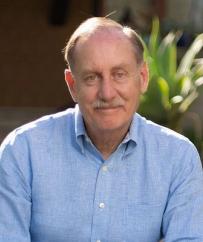
“We’re embroiled in a polycrisis...We don’t have the luxury to solve one problem at a time…Government’s failure to effectively deal with [its problems] has profoundly eroded public trust.” - Rick Cole
Your popular and prolific social media posts have identified the coming year as a pivotal one. Prospectively, are you optimistic or pessimistic on civic progress?
Realistic. As the cartoon character Pogo once observed, “we are surrounded by insurmountable opportunities.” Your readers know the litany: homelessness, a sputtering regional economy, unaffordable housing, painful fire recovery, strained public finances, not forgetting Trump’s war on California and our communities. The list goes on and on. As a member of the British war cabinet declared during the darkest days of World War II: “We are out of money, we are going to have to think!”
We’re embroiled in a “polycrisis.” Conventional solutions are inadequate. We don’t have the luxury to solve one problem at a time, because each challenge exacerbates the others. Government’s failure to effectively deal with them has profoundly eroded public trust.
We need bold, systemic reform. This is an historic opportunity for a reset, to set the path for a more equitable, more sustainable and more prosperous future. We can’t afford to simply try to muddle through. That dooms us to inexorable decline.
Elaborate on those opportunities. What kind of bold, systemic reforms do you advocate for?
Let’s focus on four: one for California, one for LA County, one for Los Angeles and one for Pasadena. Let me tick them off so we can address each. For the State, let’s end the war over housing policy with a grand compromise. For LA County, let’s all pull together to end street homelessness. For LA, real charter reform is crucial. And for Pasadena, it’s time for us to lead because to those whom much is given, much is asked.
That's an ambitious agenda. Let’s start with the State’s efforts to bludgeon cities with a “one-size-fits-all” agenda on local control of land use and neighborhood planning. Councilmember Traci Park called SB 79 the worst example yet of Sacramento "hijacking local planning, stripping away neighborhood voices, ignoring safety and infrastructure, and handing the keys to corporate developers.”
Do you agree?
As TPR readers know, I don’t share that view. Local control only works if paired with local responsibility. Since Proposition 13 passed in 1978, urban cities have understandably focused on promoting commercial development to generate revenue. Those cities failed to provide housing for the workforce needed for that development. The affluent neighboring suburban cities actively opposed new housing. The result: sprawl and skyrocketing housing costs. A disaster for the environment. A huge drain on the economy. Politically divisive by segregating people by income and race. Impossibly costly to keep expanding freeways to connect workers with jobs. And unsustainable because things that can’t go on forever, don’t. The Tejon Ranch plan to put housing on the Grapevine was literally the end of the road.
It's been six decades since Howard Jarvis upended state and local finance. The next Governor needs to restructure how California finances the basic services everyone in California relies on every day: fire, police, libraries, parks and public works.
Cities that actually deliver housing for all income levels should receive the revenue to support that growth. Cities that refuse to do so should pay the price. That’s equity. That’s local control. That’s local responsibility.
That sounds a bit simplistic. As you know from your own local government experience, California’s Legislature has for decades failed to backfill local governments for property tax revenues lost under Proposition 13—revenues now controlled by the state—while avoiding the third rail of fiscal reform out of concern for preserving state revenues and discretion.
And unfortunately we see the results...
Presently, why aren’t any of the current candidates for Governor or those seeking leadership of the State Legislature proposing serious plans for the State’s problems? The top contenders seem to be running against Trump. The failure of vision is stunning.
What about LA County and the City’s responsibility to address homelessness? Considering the recent public spat between Mayor Bass and Supervisor Horvath which doesn’t portend 'locking arms' for improved collaboration, what's your take?
It couldn't come at a worse time. Voters were persuaded to give government one last chance when they voted for Measure A. It doubled local funding for homelessness. It better produce visible results! Yet LAHSA is now imploding and LACAHSA, the new agency tasked with financing homeless and affordable housing, is still getting organized. The City and County are feuding, with the City spending millions on a losing battle in Federal Court, trying to defend the indefensible.
We’re past time for finger pointing. By seceding from LAHSA, the County has assumed the responsibility to lead. Each of the 88 cities, particularly LA City, need to get on board. The non-negotiable goal should be getting to “functional zero” where street homelessness is “rare, brief and non-recurring.” My former boss, Controller Kenneth Mejia, has consistently advocated for greater data transparency and accountability. Time to lock arms around a rigorous approach to getting the right help to the right people at the right time. Measure results and only fund what works, defund what doesn’t.
Perhaps, but we are getting ahead of ourselves here. You’ve advocated that Pasadena leads on homelessness as well. Elaborate.
It was a cornerstone of my campaign. When I was Mayor in 1993, we organized the first homeless count in California. We used that data to qualify for Federal funding. That’s why Pasadena (along with Long Beach and Glendale) is independent of LAHSA. We’ve done a creditable job since – yet we still have over 300 people out on our streets every night. This is a perfect issue for us to lead on – to replace the once-a-year count with real-time data. That’s the only way to track progress for each individual -- and reliably assess what works and what doesn’t.
Pasadena also needs year-round shelter capacity, not just a “bad weather shelter” because there’s no place for our outreach teams to take people who are desperate to get off the street. That’s fixable. Santa Ana stood up their shelter in 60 days.
Finally, we need a comprehensive “whole of community” effort -- mobilizing our civic, business and neighborhood sectors to step up. We need jobs, housing and care – the government can’t do it alone. We also need to partner with the County on the site we bought to jointly develop housing and out-patient mental health services. Our city is leading the housing aspect. We need the County to provide the services.
Back to the City of LA, where you’ve served three times over the past forty years. What experiences explain your fixation on structural reform?
Because of what I learned from serving there three times over forty years! LA’s biggest blindspot is that the City Hall crowd can’t imagine an alternative to an archaic, dysfunctional structure where no one is accountable.
Every other successful major city has some form of overall professional executive leadership who are responsible to the elected officials to effectively manage city operations and finances. Not LA.
LA is run by a weak Mayor, 15 Councilmembers, a CAO and a CLA, plus 45 commissions and boards. They oversee silos of bureaucrats who lack the authority and capacity to effectively administer a vast disorganization of more than 40 departments, more than 40,000 employees serving nearly 4 million people spread over 400 square miles. LA is an incredibly difficult city to manage – on a good day. We haven’t had many good days lately. Beneath the broken sidewalks is a broken system that desperately needs fixing.
LA should adopt common sense lessons from other successful cities. LA needs a Chief Operating Officer to actually manage operations. A Chief Financial Officer to manage finances. A larger City Council and a stronger Mayor. A two-year budget and five-year capital plan. It’s not rocket science. It's a responsible government.
Before concluding, let's focus on the reforms you advocate for Pasadena. Some would say the City of Pasadena is already a leader in providing public services to its residents, while many admire its strong finances, clean streets, lively retail districts and stable government. What’s missing?
When I say that Pasadena has become complacent, I always add that we have a lot to be complacent about. Generations of leaders, including those serving now, have made far-sighted investments that are the foundation for our current success.
My focus is sustaining our success into the future -- and more broadly sharing that success today for those in our community who are struggling to afford to live here.
Let me cite one example. Two years ago, the City Council unanimously endorsed the goal of converting our public utility to carbon-free energy by 2030. The most ambitious climate action goal of any utility in the state.
Last month, the Council adopted a realistic blueprint to actually get us there. The key is local solar and battery storage. Our new business model shifts our role from acting as a monopoly provider of electricity to ensuring residents have affordable, reliable and renewable energy, whatever the source.
Also last month, we adopted Objective Design Standards to ensure that new development meets the “Jane Jacobs standard” where “new buildings are sensitively inserted among old ones to successfully foster new fine-grained mixtures of street uses.” Part of the legitimate fear residents have about higher-density housing is that so many new developments are ugly, intrusive and out of place. The new standards will lead to both more and better housing, which is something I hope other cities will emulate.
Pasadena has the community resources to meet today’s mounting challenges by daring to innovate. We can’t sit on our assets. In the 21st Century, it’s time to rethink government, from public safety to public transit to stormwater management.
Our standard should be what Mayor Mamdani set for New York: “For too long, we have turned to the private sector for greatness, while accepting mediocrity from those who serve the public. I cannot blame anyone who has come to question the role of government, whose faith in democracy has been eroded by decades of apathy. We will restore that trust by walking a different path: one where government is no longer solely the final recourse for those struggling, one where excellence is no longer the exception.”
- Log in to post comments